


Gemstone
Jade
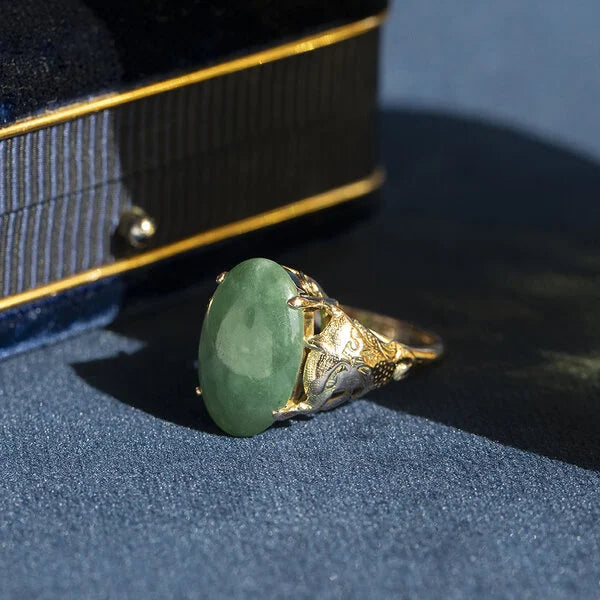
While coloured gemstones such as sapphires and rubies were widely used in Europe, jade has been the most cherished gemstone in Central and South America and in Asia for centuries. In China jade has been a symbol of status and purity for millennia, and jade jewellery is greatly loved. What we call jade in fact consists of two minerals: jadeite and nephrite.
- Colour
- Mostly green, also white or lavender
- Hardness (Mohs)
- 6 – 7
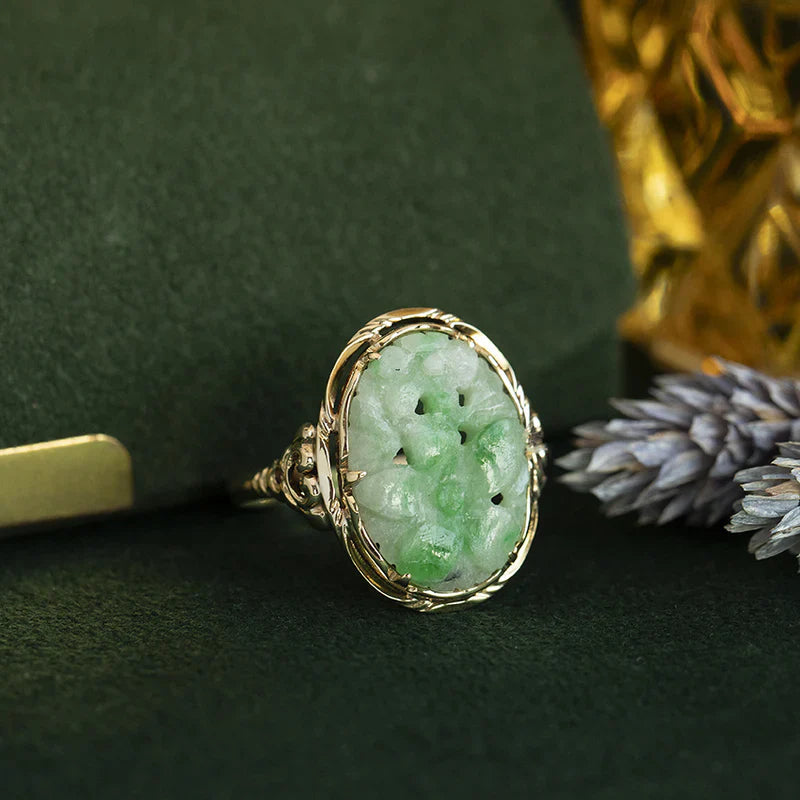
In stock: jade jewellery
-
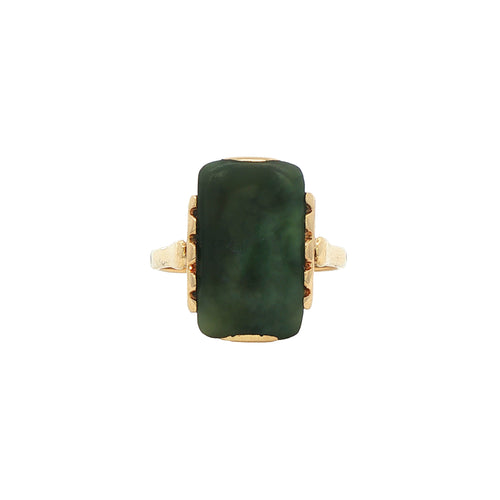 Vintage gold ring with jade, 14 kt
€650,00
-
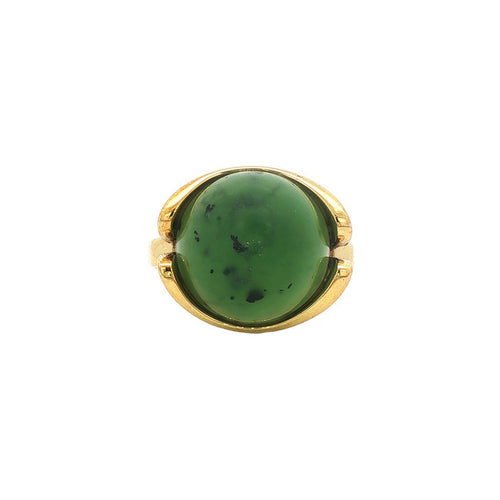 Vintage ring with jade, 8 kt
€795,00
-
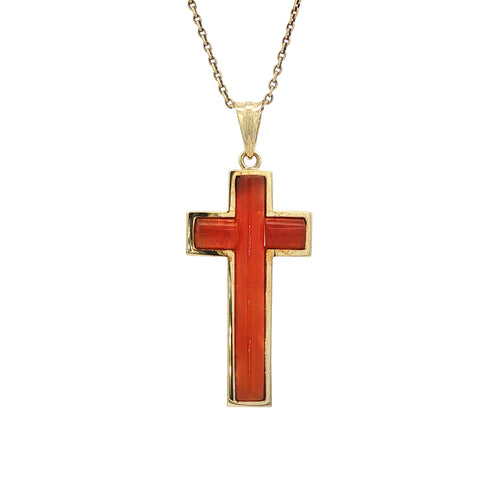 Vintage cross pendant with jade, 12 kt
€475,00
-
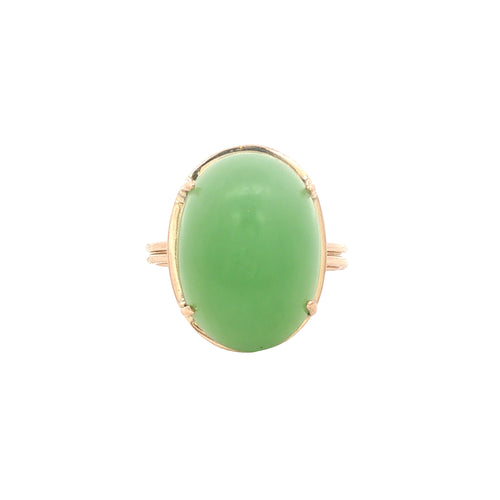 Vintage rose gold ring with jade, 18 kt
€1.075,00
-
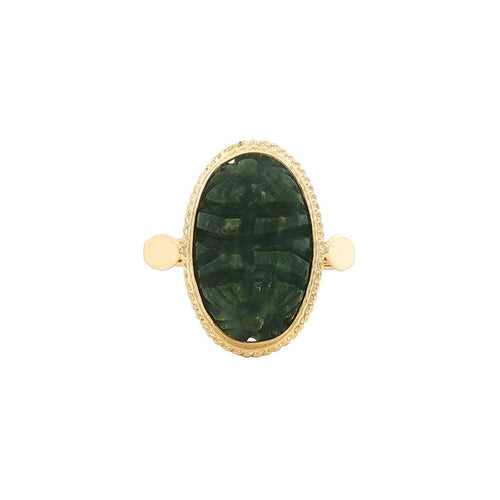 Vintage 14 kt gold ring with jade
€750,00
-
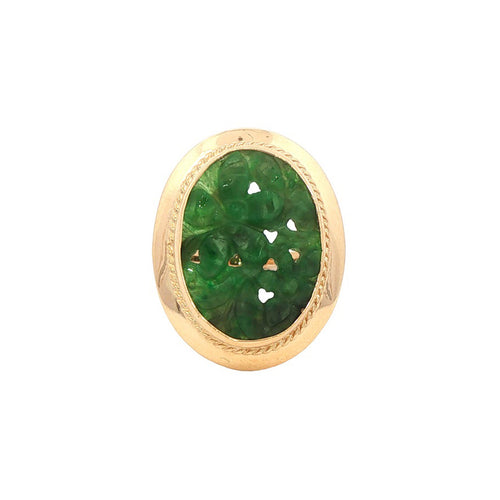 Vintage 14 kt gold ring with jade
€950,00
-
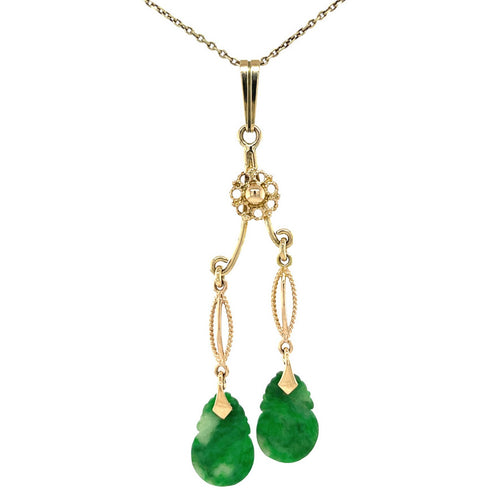 14 kt vintage gold pendant with jade
€525,00
-
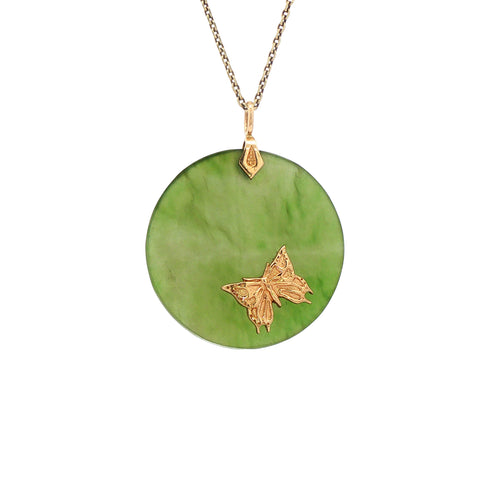 Vintage gold butterfly pendant with jade, 14 kt.
€625,00
The Maya and the Aztecs
In the Americas, too, jade has an ancient history. The Maya and Aztecs carved jadeite into religious and everyday objects, and also ground it into powder for medicinal use.
The name jade comes from the Spanish ‘piedra de ijada’, ‘stone of the flank’. Early Spanish explorers saw the local people tie pieces of the mineral around their waist to cure or relieve various pains and ailments.
A royal gemstone
Jade is best known, however, for its ancient relationship with Chinese culture. Nephrite jade was already being used around 3000 BC. In China the material was called ‘yu’, meaning royal gem. The burial suits made of countless small plaques of nephrite jade, found in tombs from the second century BC, are world famous.
The first jadeite reached China from Myanmar, and early nineteenth-century carvers created masterpieces that remain unsurpassed in concept, design and technical execution. The rarest variety was reserved exclusively for the Chinese emperors, and the material was so highly prized that emperors are even said to have waged wars to obtain exceptional pieces. To this day jade symbolises prosperity, success and good fortune, and it is often worn as a talisman and in jade jewellery.
Tough stuff
Many people do not realise that jade is in fact two materials, nephrite and jadeite. Both consist of tiny interlocking crystals that cannot be distinguished with the naked eye. This structure makes jade very tough, so it is well suited to carving; a well-known example is the jade bangle, made from a single piece of stone.
Jadeite comes in a wide range of attractive colours: many shades of green, yellow and reddish orange, as well as white, grey, black, brown and lavender (often a pale purple or greyish violet). The colour is often banded or mottled, giving jadeite an interesting visual texture that carvers can use to create imaginative and intriguing effects.
Judging jade
The quality of jade is judged differently from that of most other gemstones. Many gemstones are transparent and faceted to let the light through, whereas jade is translucent to opaque and is therefore usually carved. Jade is judged above all on its colour and lustre before it is made into jewellery.
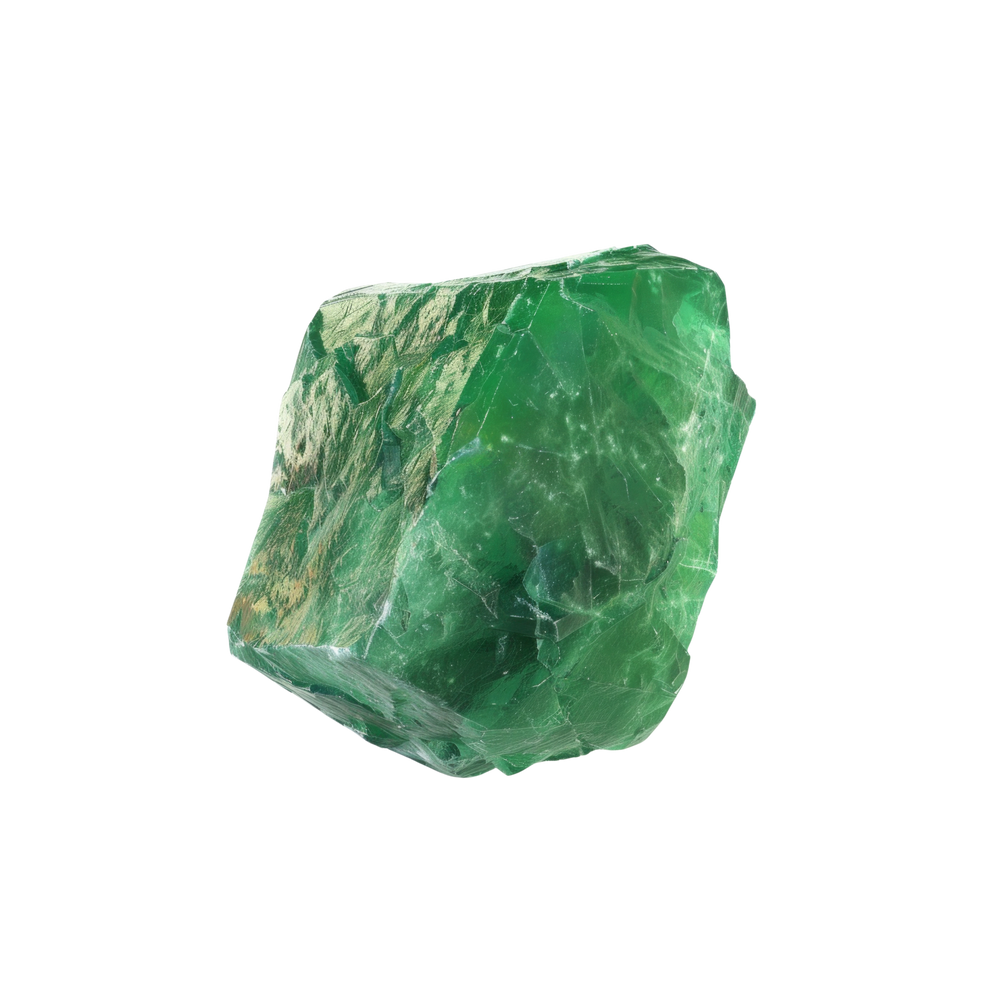
High-quality jadeite is translucent with an oily lustre; lower-quality jadeite is opaque with a less greasy lustre. The best-known colour of jade is green, but it occurs in a wide variety of colours, from white to yellow and lilac to fiery red, blue and brown. In Asia white is highly prized, but green and purple jade are also much loved. Nephrite is also accepted as jade in the international gem and jewellery trade. It ranges from translucent to opaque and can be light to dark green, yellow, brown, black, grey or white; its colours are more muted than those of jadeite, and it is often mottled or banded.
(Modern gemmologists use the word jade as a collective term for both nephrite and jadeite, which have been linked throughout history. In fact, the term jade has also been applied to a number of gemstones and decorative materials that resemble jade, and even to some man-made imitations of jadeite and nephrite.)
Care
Jade is tough, but it can scratch. Clean it with lukewarm water and a soft cloth, without harsh products or steam, and wear it with care to preserve its lustre.
Discover our collection of vintage jade jewellery.
Frequently asked questions
How hard is jade?
Jade has a hardness of 6 to 7 on the Mohs scale, which is softer than sapphire or diamond, for example. It is best to take off a jade ring for heavy work, sport or cleaning.
Do I get a certificate with jade jewellery?
Yes. Our gemmologist examines the stones before a piece goes online, and the description states which stone it is. Every piece comes with a certificate.
More gemstones