


Gemstone
Opal
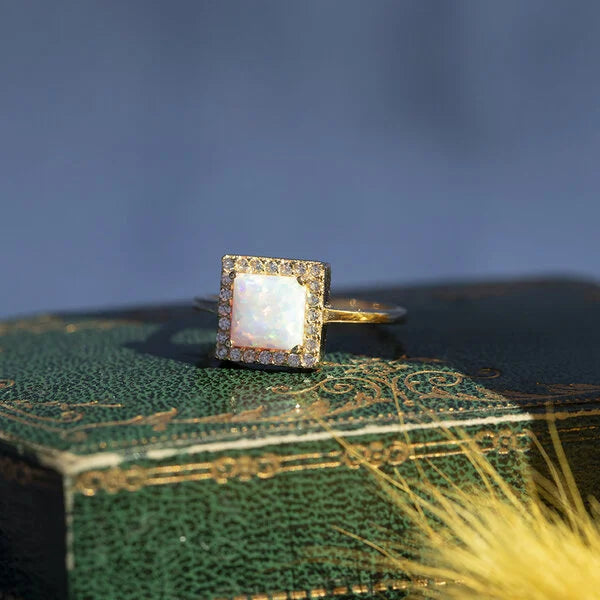
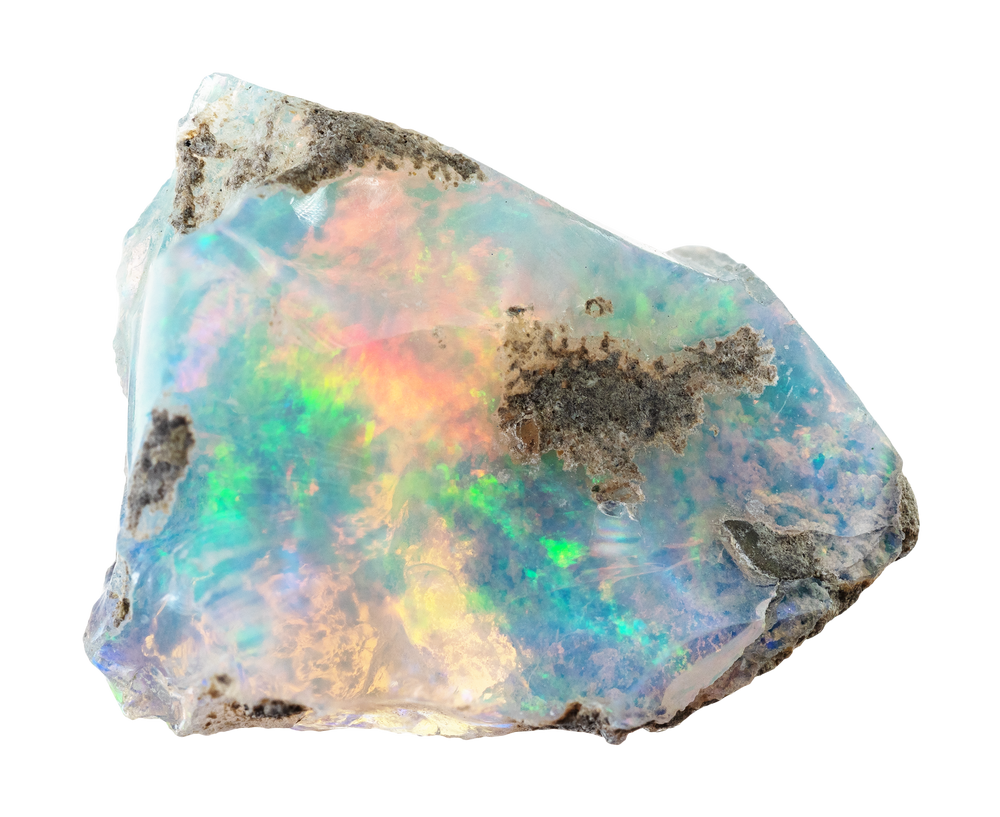
Opal is a fascinating mineral that is often used in jewellery. It is related to quartz and consists of hydrated silica, meaning it contains water, which is why most opals are translucent, although there are of course exceptions. Opals can be roughly divided into three types: precious opal, fire opal and common opal.
In stock: opal jewellery
We have no opal pieces online at the moment. Vintage pieces are one of a kind and sell quickly. Browse all our gemstone jewellery.
- Precious opal is translucent and iridescent: you can see through the stone, yet it shows every colour of the rainbow, a kind of holographic effect. This shimmer is known as play of colour.
- Fire opal is usually yellow to deep red and is often described as milky, because the stone is partly transparent and its colours look slightly creamy. Fire opal is sensitive to pressure and bright light, and it does not show play of colour in the way precious opal does.
- Common opal is generally opaque. It holds relatively little water, which makes the stone cloudy, usually resulting in a pale, white or lilac colour.
Opallios and upala
There are also various kinds of synthetic opal, and each of the types above can be divided into many smaller varieties: opal truly is an endless world of beauty. The name opal may come from the Greek ‘opallios’, meaning to see a change of colour, which is very fitting as the colours of an opal change with the light that falls on it. It is also linked to the Sanskrit ‘upala’, meaning precious stone.
Opal can form in fossils or as a filling in cracks and cavities in rock. The finest opals once came mainly from what was then Czechoslovakia. In time, magnificent deposits were also found in Australia, and more recently in Brazil, Guatemala, Honduras, Japan and the United States. The most important deposits are in Australia, the source of around 90% of the opals used in jewellery.
Virgin Rainbow
Perhaps you have heard of the Virgin Rainbow? This opal, found in Australia, is one of the most valuable opals in the world. Its colours range from vivid green to bright pink and from aqua blue to fiery orange, a true spectacle for the eye. The stone is valued at more than a million euros and can be seen at the South Australian Museum in Adelaide.
Opal was not always as highly prized as it is today. There was even a time when people in the West believed precious opal brought bad luck and stood for infidelity and evil. In the Far East, by contrast, the stone stood for fidelity and hope, a view the West has happily since adopted.
Opal jewellery
Opal is said to offer protection and to encourage an active, open attitude in its wearer, and it has long been linked with enjoyment: opal is said to help you savour all the beautiful things in life and to make you optimistic, spontaneous and cheerful. A pleasant bonus alongside the beauty and remarkable history of the stone.
Care
Opal is very sensitive to temperature, chemicals and drying out. Use only a soft, damp cloth: no soap, no soaking and no ultrasonic cleaning.
Discover our collection of vintage opal jewellery.
Frequently asked questions
How hard is opal?
Opal has a hardness of 5.5 to 6.5 on the Mohs scale and is sensitive to knocks. Take an opal ring off for heavy work, sport or cleaning; earrings and pendants are less vulnerable.
Which month is opal the birthstone for?
Opal is a birthstone for October, together with tourmaline. Read more about the October birthstone.
Do I get a certificate with opal jewellery?
Yes. Our gemmologist examines the stones before a piece goes online, and the description states which stone it is. Every piece comes with a certificate.
More gemstones