
October birthstone: opal and tourmaline
If you were born in October, you have two birthstones: opal and tourmaline. They are very different. Opal is known for its play of colour, tourmaline for the enormous range of colours in which it occurs.
- Colour
- Opal with a play of colour, tourmaline in almost every colour
- Hardness (Mohs)
- Opal 5.5 – 6.5, tourmaline 7 – 7.5
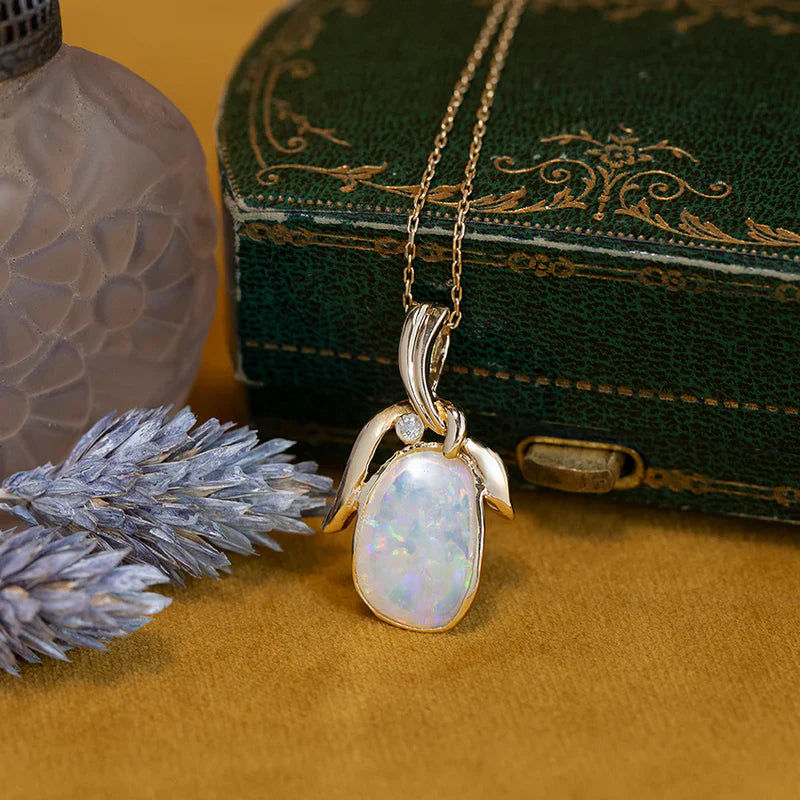
In stock now: opal and tourmaline jewellery
-
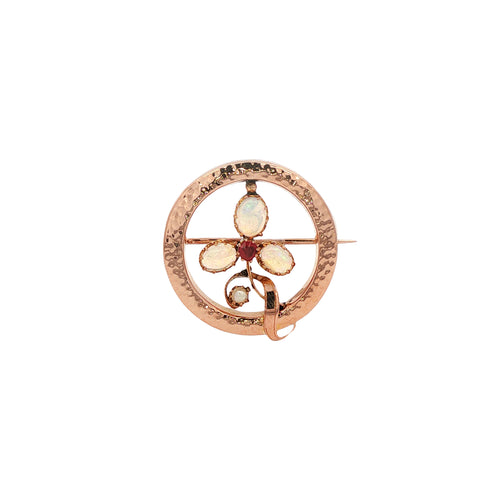 18 kt rose gold vintage brooch with opal, pearl, and ruby
€775,00
-
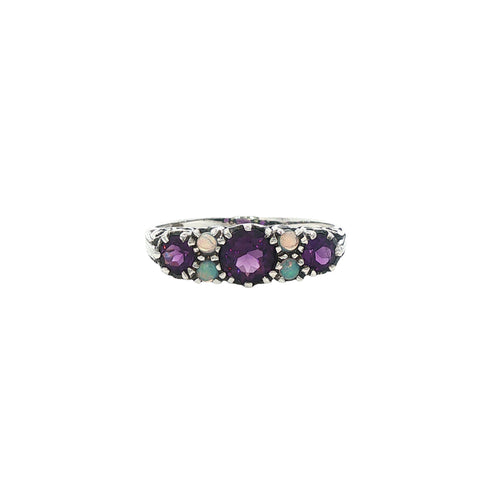 Silver ring with amethyst and opal, 925 sterling silver
€170,00
-
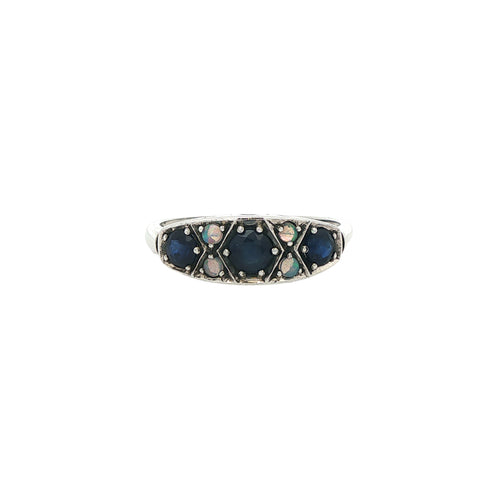 Silver ring with sapphire and opal, 925 sterling silver
€365,00
-
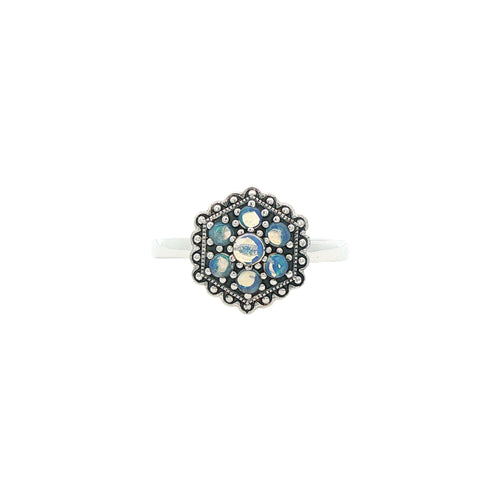 Silver ring with opal 925
€225,00
-
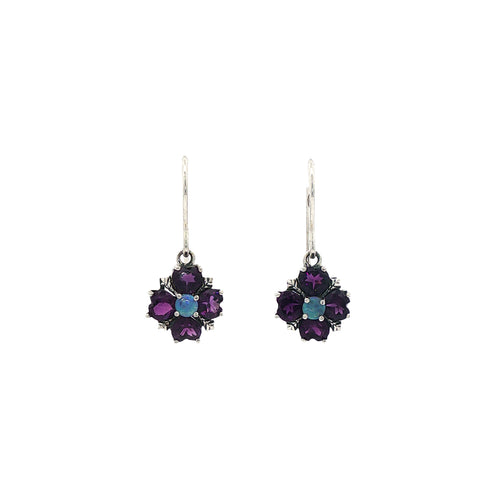 Silver drop earrings with opal and amethyst, 925 sterling silver
€240,00
-
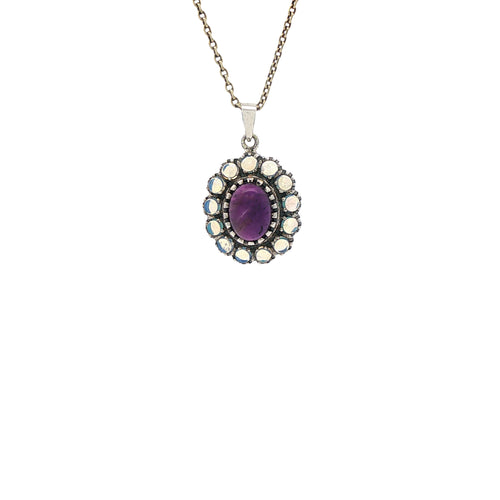 925 silver pendant with opal and amethyst
€295,00
-
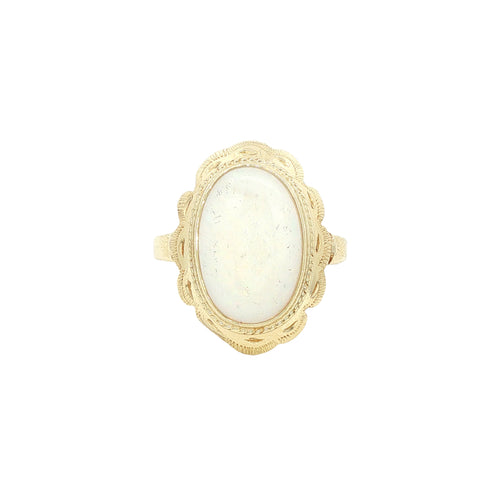 14 kt vintage gold ring with opal
€1.075,00
-
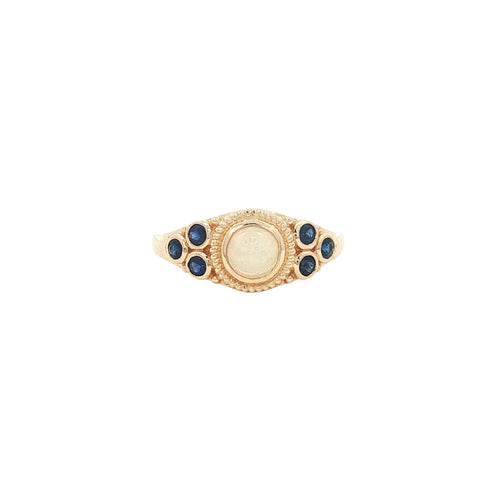 14 kt gold ring with opal and sapphire
€815,00
Opal
Opal contains water and is made up of tiny spheres. These split the light into flashes of blue, green, orange and red, known as play of colour. Most opals come from Australia. Opal was much loved in the Victorian and Art Nouveau periods, often in gold settings.
Opal is delicate, with a hardness of 5.5 to 6.5. Protect it from knocks, sudden changes in temperature and drying out, and never clean it in an ultrasonic cleaner.
Tourmaline
Tourmaline occurs in almost every colour: pink, green, blue, yellow and black. There are even bicoloured stones, such as watermelon tourmaline, pink in the centre and green at the edge. With a hardness of 7 to 7.5, tourmaline is tougher than opal and suitable for rings.
A gift for October
If you are looking for something to wear every day, choose tourmaline. For earrings or a pendant, opal is a special choice. Read more about opal and tourmaline.
Frequently asked questions
Why does opal show so many colours?
The tiny spheres inside the stone split the light into different colours. This is called play of colour.
Is opal suitable for a ring?
Opal is sensitive to knocks. A ring is possible, but wear it with care. Earrings and pendants are less vulnerable.
What is watermelon tourmaline?
A tourmaline that is pink in the centre and green at the edge, like a slice of watermelon.