
July birthstone: ruby
If you were born in July, ruby is your birthstone. Ruby is red corundum, the same mineral as sapphire. Only the red variety is called ruby; all other colours are called sapphire.
- Colour
- Red
- Hardness (Mohs)
- 9
In stock now: ruby jewellery
-
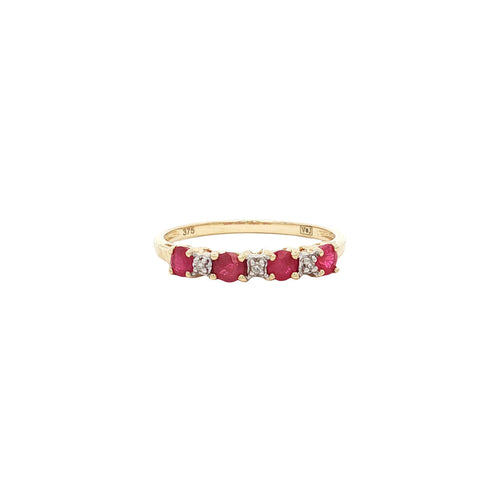 Ring with ruby and diamond, 9 kt
€460,00
-
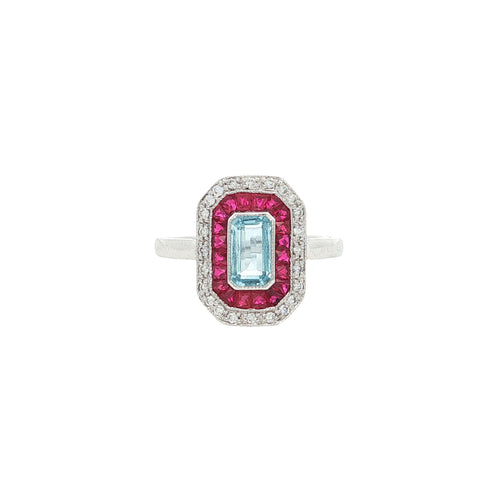 14 kt gold ring with topaz, ruby and diamond.
€2.150,00
-
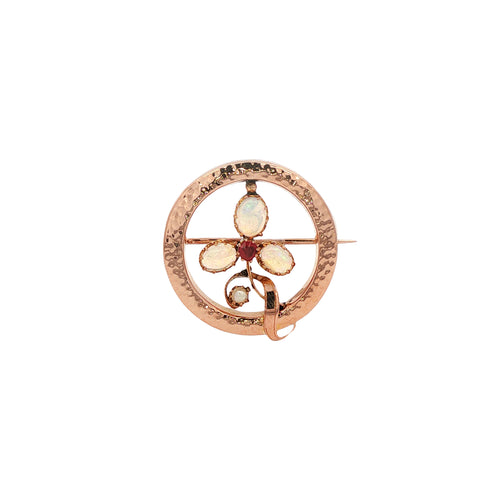 18 kt rose gold vintage brooch with opal, pearl, and ruby
€775,00
-
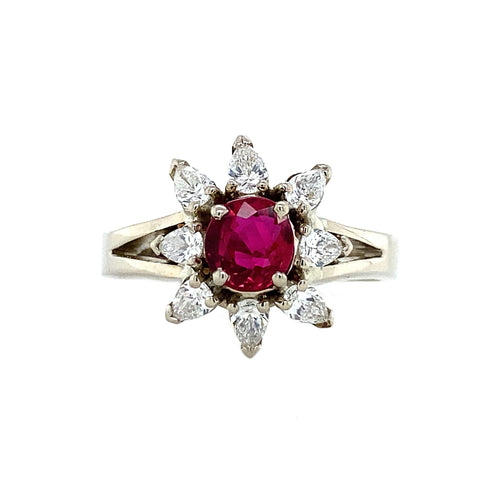 18 kt white gold halo ring with ruby and diamond
€3.095,00
-
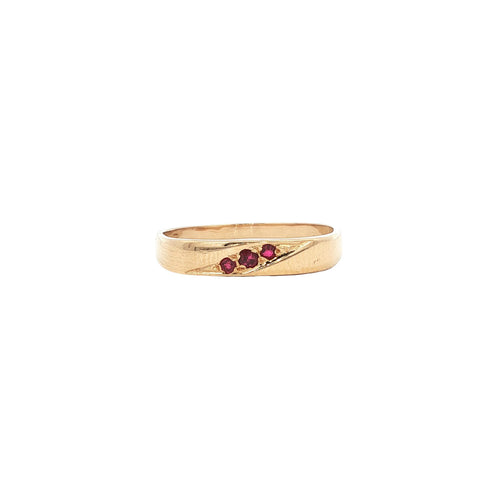 18 kt gold ring with ruby
€750,00
-
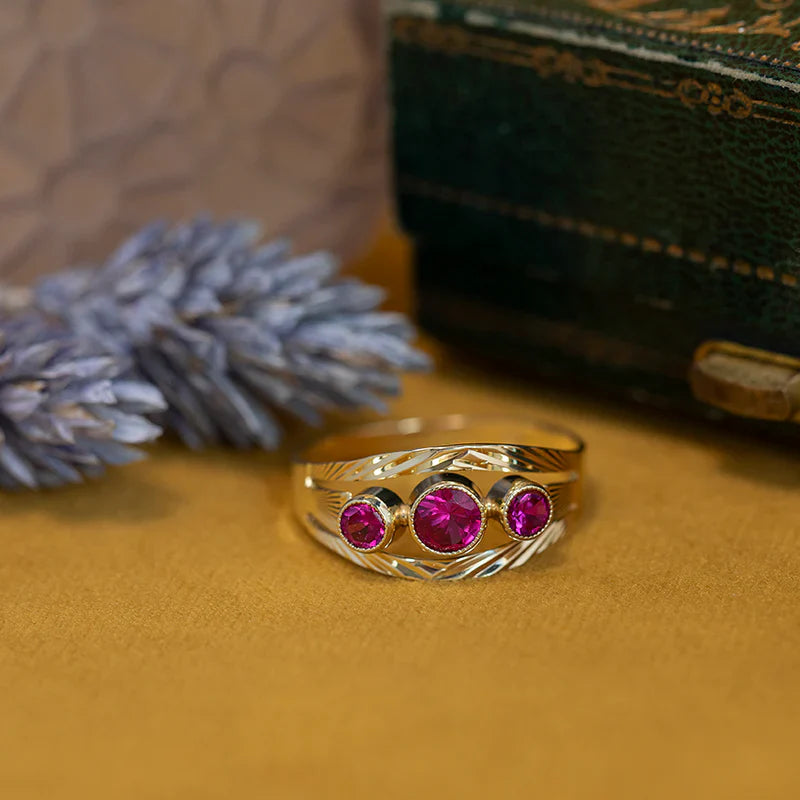
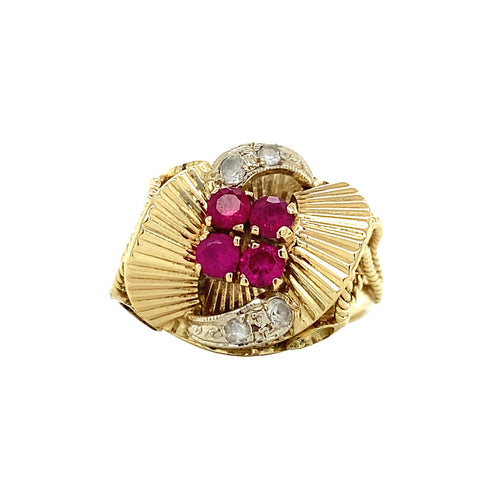 14 kt gold ring with ruby and zirconia
€1.060,00
-
 Vintage 14 kt white gold ring with ruby and diamond
€2.495,00
-
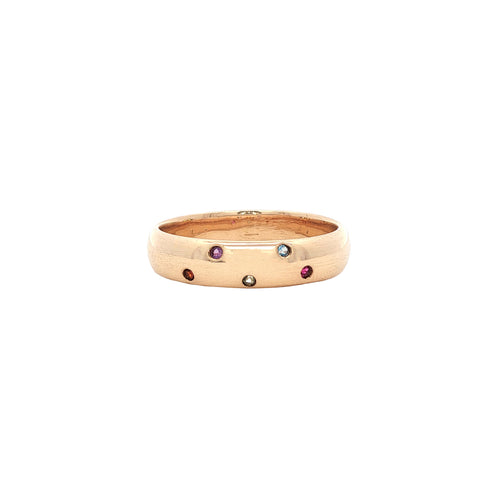 Gold vintage ring with citrine, amethyst, sapphire, prasiolite and ruby 14 kt
€1.050,00

Red from chromium
The red colour of ruby comes from small amounts of chromium. The most sought-after colour is a clear, deep red. Rubies have long been heated to improve their colour; this is standard practice in the trade.
Ruby in vintage jewellery
In vintage rings you often see ruby surrounded by small diamonds, or set in a row alongside diamonds in a half-eternity ring. In the 1940s rubies were popular in jewellery made of rosy yellow gold. Large rubies are rare; most vintage pieces have smaller stones.
Ruby for everyday wear
With a hardness of 9 on the Mohs scale, ruby is, after diamond, one of the hardest gemstones. A ruby ring is therefore well suited to everyday wear. You can read more about the stone on our ruby page.
Frequently asked questions
What is the difference between ruby and sapphire?
They are the same mineral, corundum. Red corundum is called ruby; all other colours are called sapphire.
Are rubies treated?
Many rubies are heated to improve their colour. This is standard practice in the trade.
Can I wear a ruby ring every day?
Yes. After diamond, ruby is one of the hardest gemstones.