

March birthstone: aquamarine
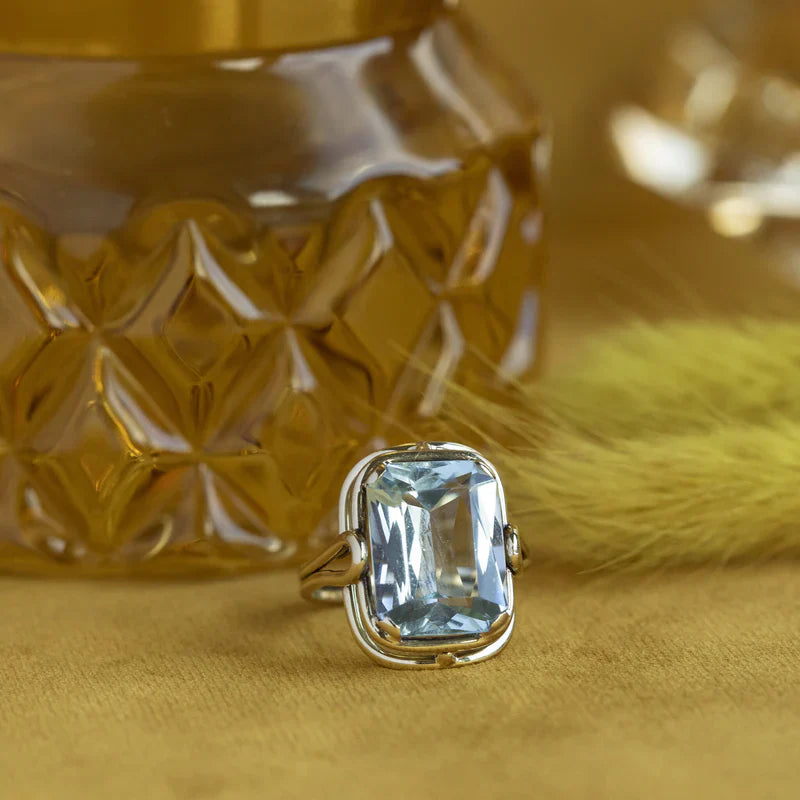
If you were born in March, aquamarine is your birthstone. It is a pale blue to blue-green stone, as clear as water. Aquamarine belongs to the same family as emerald: both are beryl, only the colour differs.
- Colour
- Pale blue to blue-green
- Hardness (Mohs)
- 7.5 – 8
- Alternative stones
- Bloodstone
In stock now: aquamarine jewellery
-
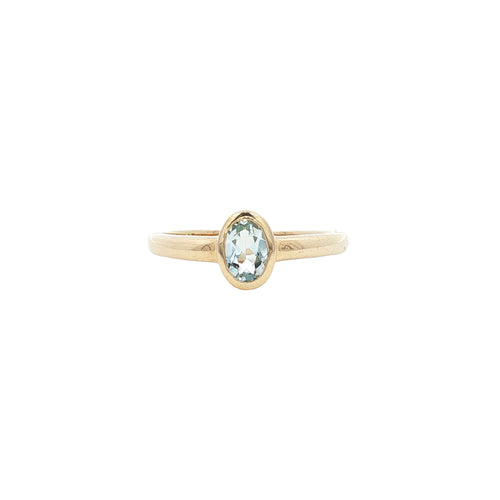 Aquamarine ring, 9 kt
€490,00
-
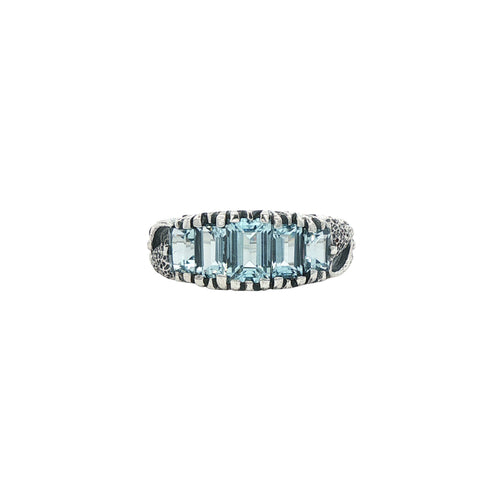 Silver ring with aquamarine 925
€340,00
-
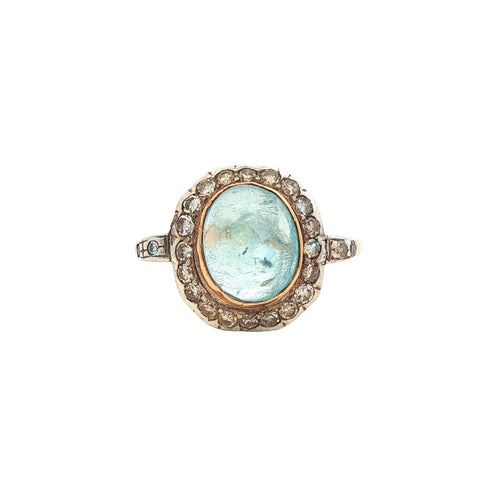 Vintage gold ring with aquamarine and diamond, 18 kt/925
€1.875,00
-
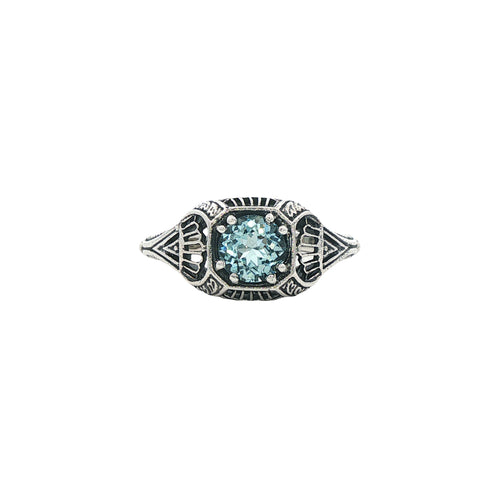 Silver ring with aquamarine 925
€230,00
-
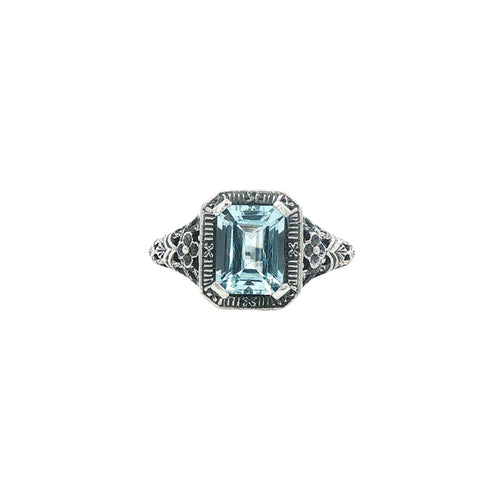 925 silver ring with aquamarine
€525,00
-
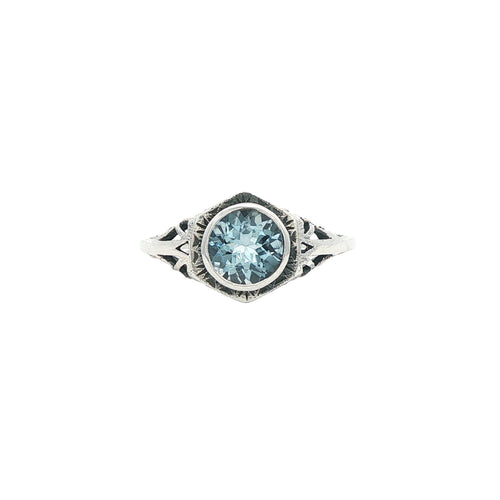 Silver ring with aquamarine 925
€450,00
-
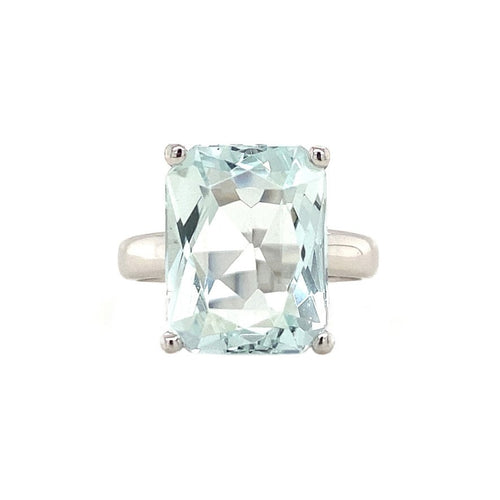 14 kt white gold ring with aquamarine
€1.595,00
-
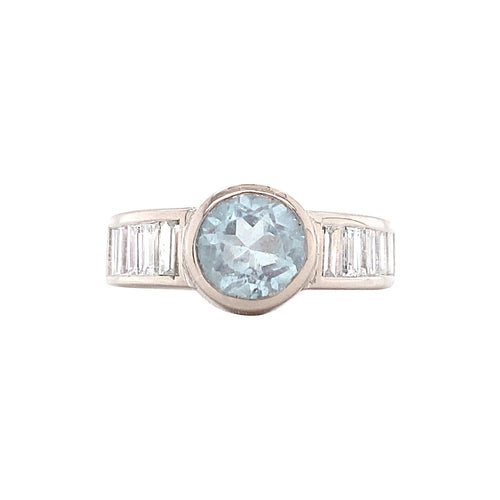 14 kt white gold ring with aquamarine and diamond
€3.995,00
Where does the name come from?
The name comes from the Latin aqua marina, seawater. That suits its colour, which ranges from an almost colourless pale blue to a deeper blue-green. The more intense the blue, the rarer the stone.
Aquamarine in vintage jewellery
Aquamarine was much loved in the Art Deco period, the 1920s and 1930s, when clear, clean-lined stones went perfectly with white gold and platinum. You often see it in an emerald (step) cut, which shows off its clear colour well. Aquamarine was also widely used in later cocktail rings.
Is aquamarine suitable for everyday wear?
With a hardness of 7.5 to 8 on the Mohs scale, aquamarine is durable enough for a ring you wear often. It usually has fewer inclusions than emerald, which makes it less vulnerable.
Also for March: bloodstone
Older lists also mention bloodstone, a dark green stone with red flecks. You sometimes come across it in vintage men’s rings and signet rings. You can read more about aquamarine on our aquamarine page.
Frequently asked questions
What is the difference between aquamarine and blue topaz?
They look alike, but they are different minerals. Aquamarine is usually softer in colour, while blue topaz is often a brighter blue.
Is aquamarine related to emerald?
Yes. Both are beryl. Green beryl is called emerald, pale blue beryl is called aquamarine.
Which other stone is there for March?
Older lists also include bloodstone, a dark green stone with red flecks.