
February birthstone: amethyst
If you were born in February, amethyst is your birthstone. It is purple quartz, in shades from soft lilac to deep violet. Because amethyst is found in large, clear stones, you often see it in vintage jewellery as the centrepiece of a ring or pendant.
- Colour
- Purple, from lilac to deep violet
- Hardness (Mohs)
- 7
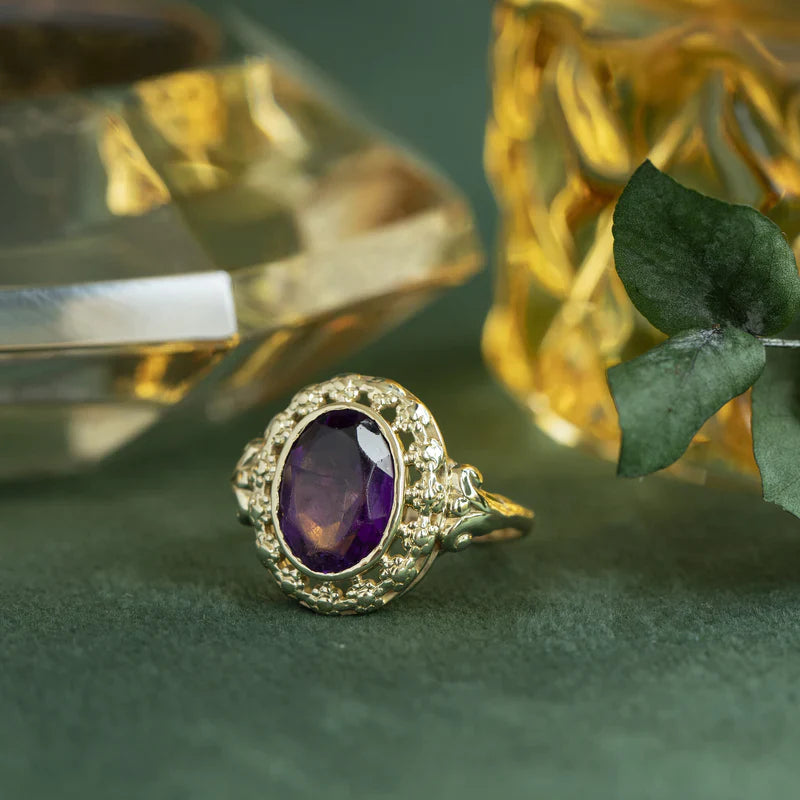
In stock now: amethyst jewellery
-
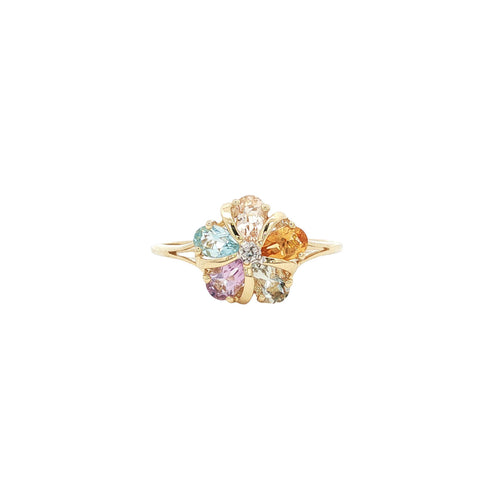 Ring with amethyst, topaz, morganite, citrine and diamond 9 kt
€460,00
-
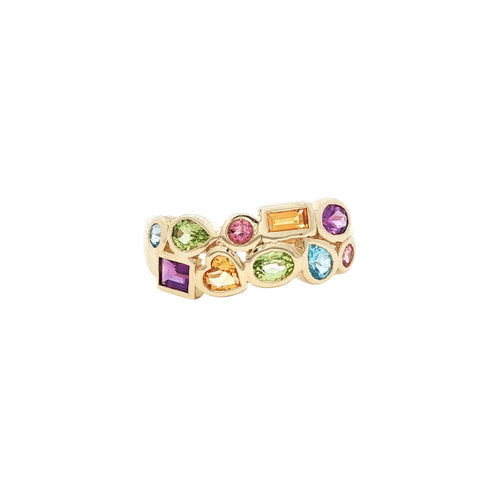 Ring with citrine, amethyst, peridot, topaz and tourmaline, 9 kt
€875,00
-
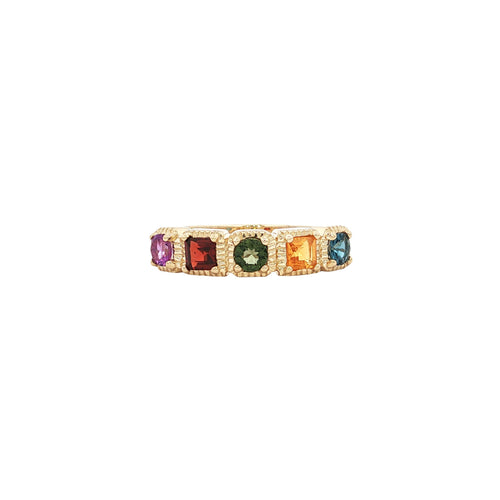 Ring with amethyst, garnet, tourmaline, citrine and topaz, 9 kt
€585,00
-
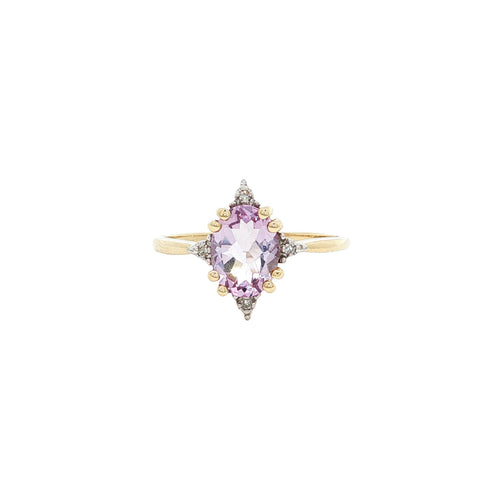 Ring with amethyst and diamond, 9 kt
€480,00
-
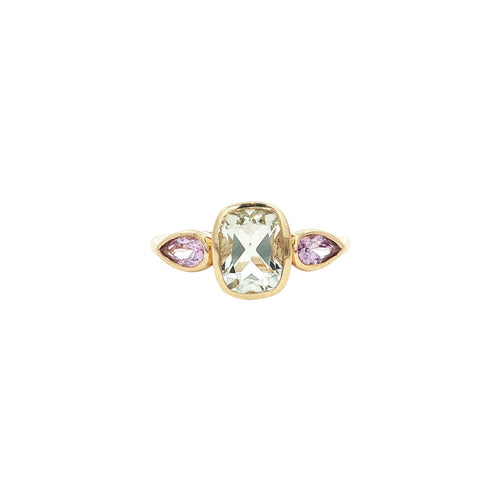 Amethyst ring 9 kt
€560,00
-
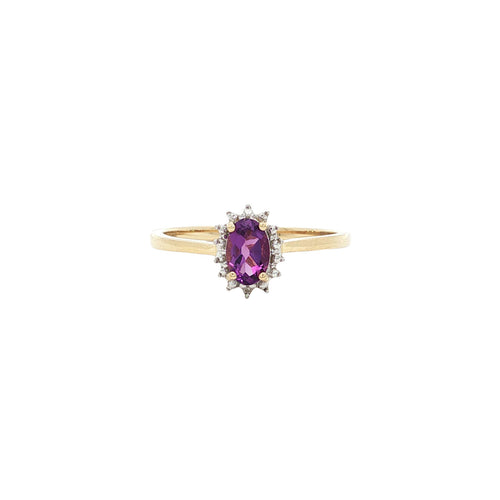 Ring with amethyst and diamond, 9 kt
€425,00
-
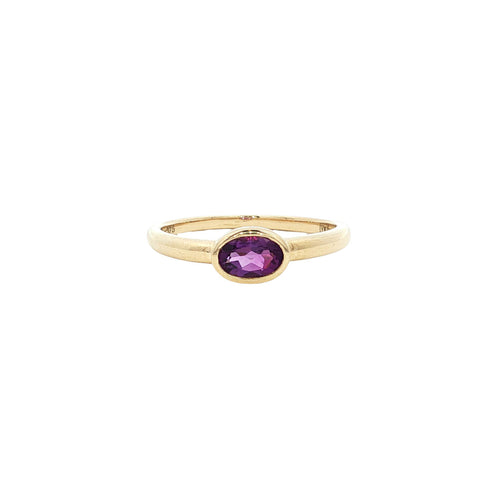 Amethyst ring, 9 kt
€415,00
-
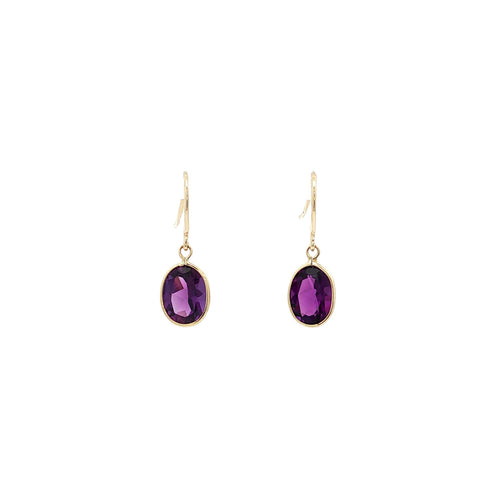 Amethyst earrings 9 kt
€280,00
Where does the name come from?
Amethyst comes from the Greek amethystos, which roughly means not drunk. In antiquity people believed the stone protected against drunkenness. That is a story rather than a property of the stone, but it explains why amethyst has such a long history in drinking vessels and jewellery.
Amethyst in vintage jewellery
For a long time amethyst was a precious stone, until large deposits were discovered in South America in the nineteenth century. After that it came within reach of many more people. In Victorian jewellery you often see amethyst in gold settings, and in the 1940s and 1950s in large cocktail rings.
Is amethyst suitable for everyday wear?
Amethyst has a hardness of 7 on the Mohs scale, so it can take a knock. Do not leave amethyst jewellery in full sun for months on end: some stones can fade slightly. Lukewarm water and mild soap are all you need to clean it.
An amethyst gift
Purple suits a great many people, and amethyst is available at every price point. You can read more about the stone on our amethyst page.
Frequently asked questions
What colour is amethyst?
Purple, from pale lilac to deep violet. The deeper and more even the colour, the more valuable the stone usually is.
Does amethyst fade in sunlight?
Some amethysts become paler if they are left in bright sunlight for long periods. It is best to keep your jewellery in a box or drawer.
Is amethyst a quartz?
Yes, amethyst is the purple variety of quartz, just as citrine is the yellow variety.