
Amethyst
Amethyst: the gemstone of kings, saints and activists
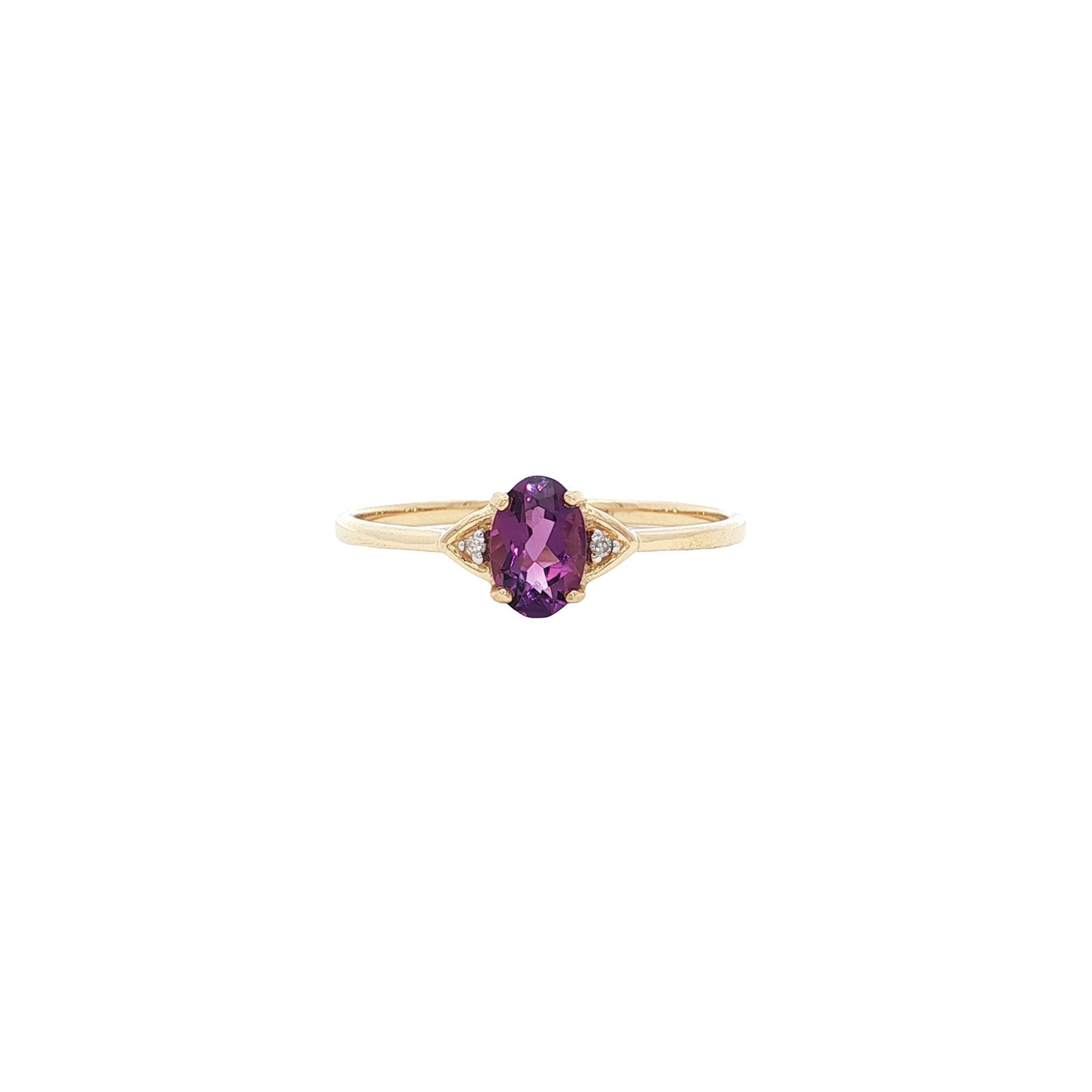
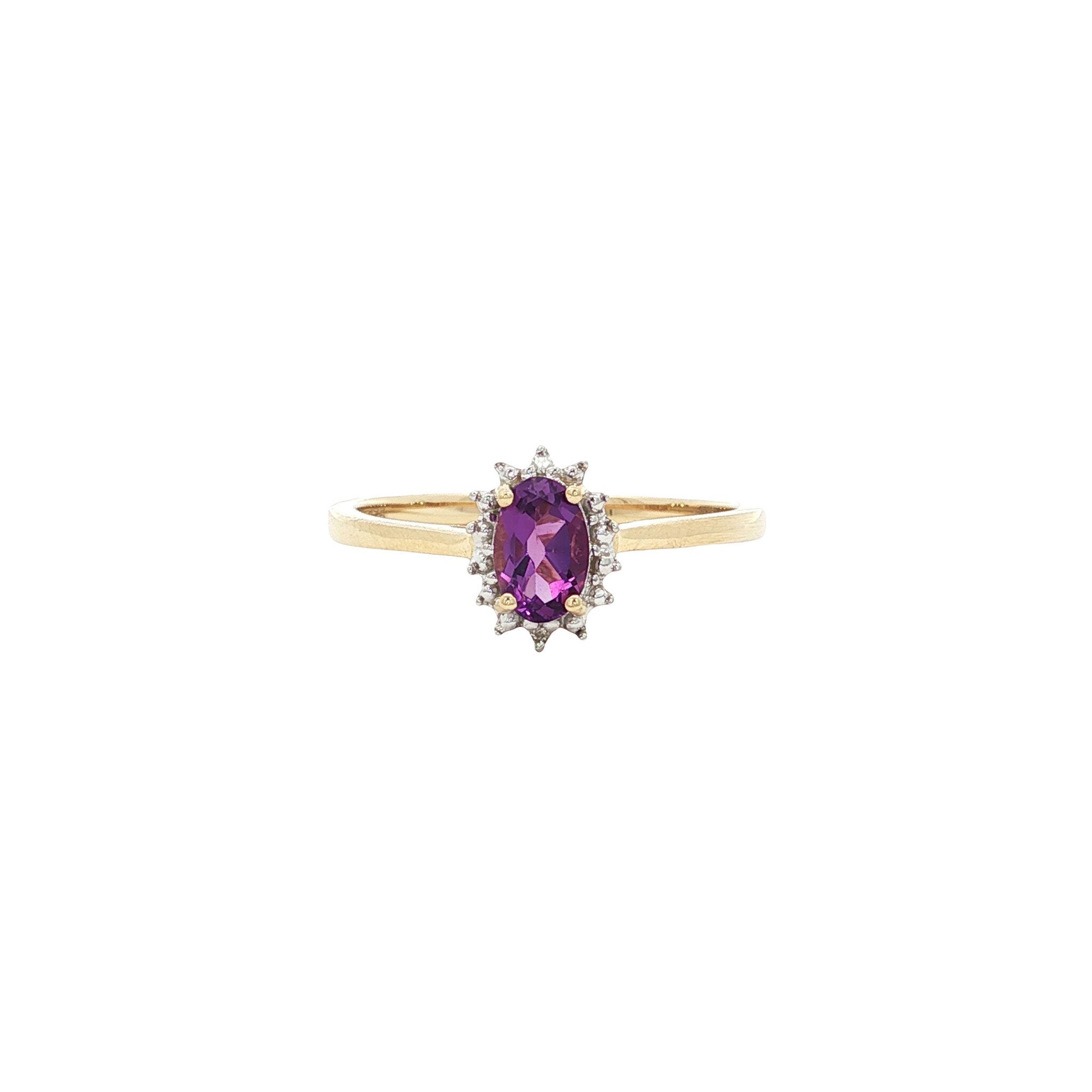
Amethyst, the purple variety of the mineral quartz, has been one of the most beloved gemstones for amethyst jewellery for centuries. In the past, this purple stone was considered just as special as sapphires, emeralds, and rubies, and therefore amethyst gemstone jewellery was often worn by kings and bishops. Amethyst is the birthstone for February.

Rare purple stone
Quartz is one of the largest mineral groups in the world and exists in many different colors and forms. Although quartz is a common mineral, the purple variety is relatively rare. This makes amethyst the most valuable variety in the quartz family. Amethyst occurs naturally in both clear and semi-transparent forms and ranges from light lilac to deep purple in color. It can be found virtually anywhere in the world. Major mines can be found in Canada, the United States, France, Myanmar, Russia, and Sri Lanka, among other places.
Very strong and yet easy to sharpen
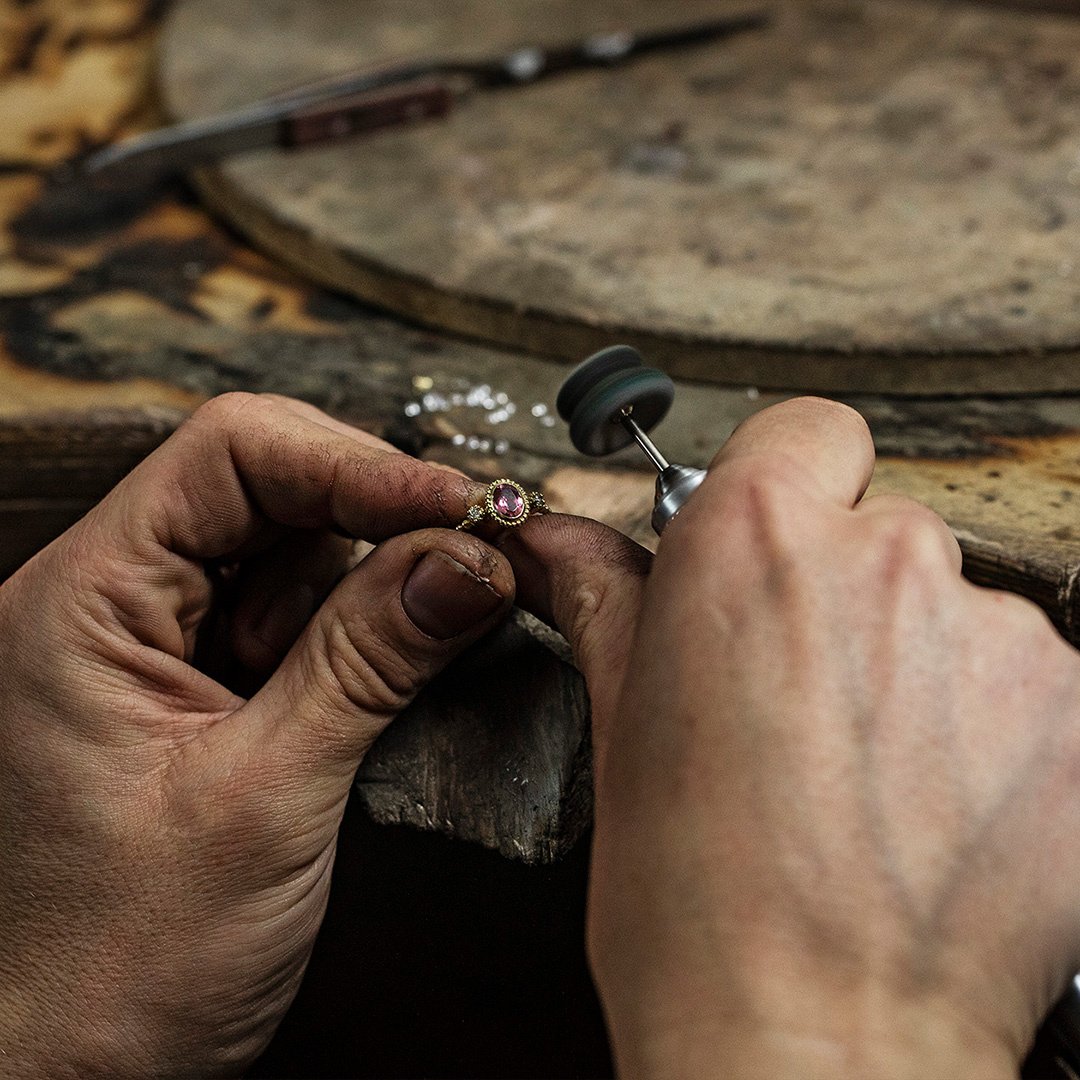
Amethyst forms deep within the earth's crust under high pressure and temperature and grows in characteristic hexagonal crystal shapes. These crystals are so attractive that they are also highly sought after in their raw form. Amethyst is also frequently cut for Jewellery. Gemstone cutters can facet the mineral relatively easily into unique gemstones in a variety of cuts. Because amethyst is easy to cut yet very strong, it is also used to carve small sculptures. However, this mineral remains the most popular choice for amethyst gemstone jewellery.
The more purple the better
The most valuable variety of amethyst is completely transparent without inclusions, has a bright luster, and a deep purple color. Lesser varieties have a paler purple color and are partially opaque; sometimes white bands of colorless quartz run through the purple material. Because amethyst is relatively rare, much of it is now obtained by heating citrine, the yellow variety of quartz, which changes the color from yellow to purple.

Popular with the Ancient Greeks and Romans
Amethyst is one of the first gemstones used by humans as jewellery. Jewellery containing amethyst has been found in the tombs of the ancient Egyptians, and the ancient Greeks and Romans were also well-known enthusiasts of this purple mineral. Although quartz is found worldwide, amethyst was its rare sister, appearing only occasionally. This only changed in the 19th century, when large quantities of amethyst were discovered in Brazil. Before that, amethyst was so rare that it was as valuable as the then much rarer gemstones sapphire, ruby, and emerald.
Amethyst gemstone Jewellery was also popular and exclusive because the color purple held special significance in antiquity. Purple was considered a color worn only by people of royal descent. Julius Caesar, for example, decreed by law that he was the only one permitted to wear purple during his reign. The first Christian rulers also believed purple was a special color. It was not without reason that popes and bishops had their signet rings made of amethyst. Saint Valentine, the founder of Valentine's Day, is known to have worn a ring with an amethyst carved in the shape of Cupid on the day he died.
Popular with the Ancient Greeks and Romans
Amethyst is one of the first gemstones used by humans as jewellery. Jewellery containing amethyst has been found in the tombs of the ancient Egyptians, and the ancient Greeks and Romans were also well-known enthusiasts of this purple mineral. Although quartz is found worldwide, amethyst was its rare sister, appearing only occasionally. This only changed in the 19th century, when large quantities of amethyst were discovered in Brazil. Before that, amethyst was so rare that it was as valuable as the then much rarer gemstones sapphire, ruby, and emerald.
Amethyst gemstone jewellery was also popular and exclusive because the color purple held special significance in antiquity. Purple was considered a color worn only by people of royal descent. Julius Caesar, for example, decreed by law that he was the only one permitted to wear purple during his reign. The first Christian rulers also believed purple was a special color. It was not without reason that popes and bishops had their signet rings made of amethyst. Saint Valentine, the founder of Valentine's Day, is known to have worn a ring with an amethyst carved in the shape of Cupid on the day he died.
Amethyst as an anti-hangover remedy?
In ancient times, amethyst wasn't just chosen for its beautiful color and luster. There was a strong belief in the stone's mysterious healing properties. The Roman writer Pliny the Elder wrote that amethyst was known as a stone that helped against drunkenness; the Greek term "amethystos," from which the mineral takes its name, therefore means "not drunk." The Romans also believed that wearing an amethyst would protect you from evil spells cast against you by enemies.
Women's rights
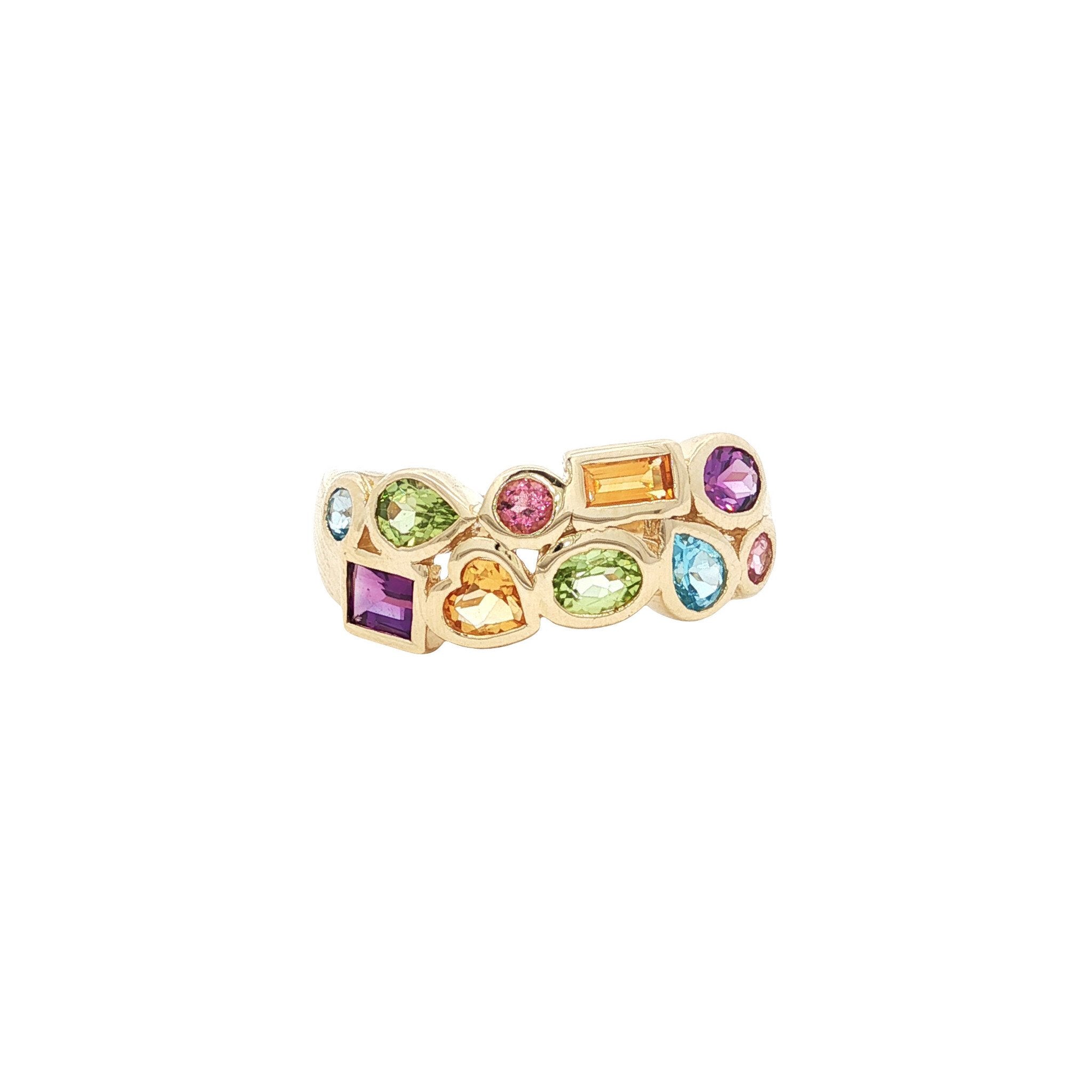
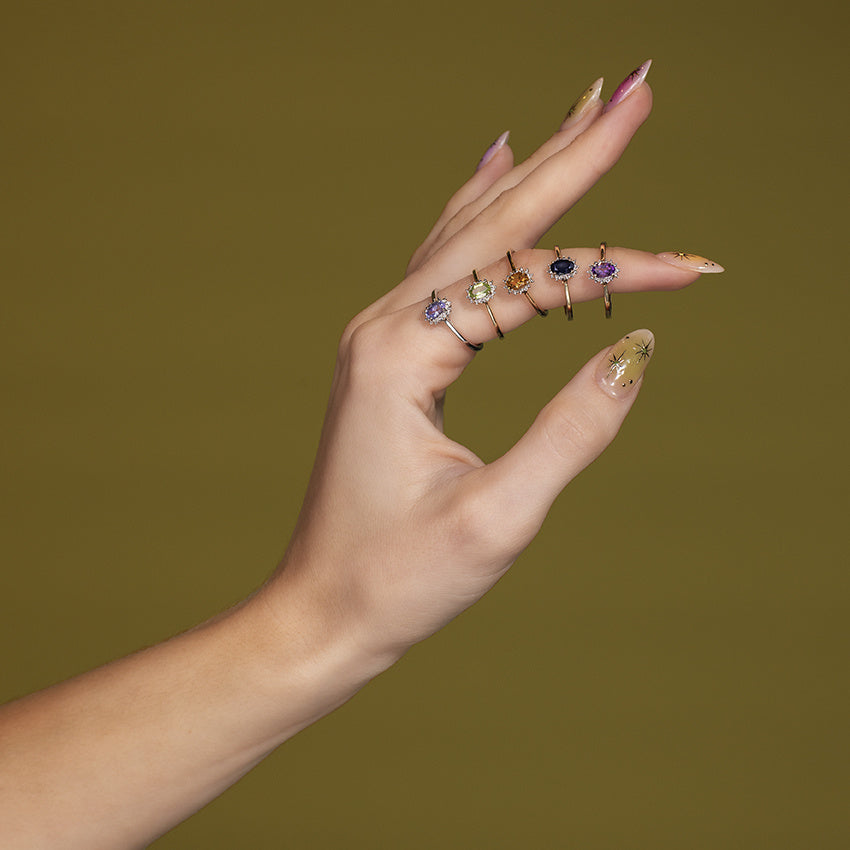
More recently, the stone has taken on added significance for a generation of women. You may be familiar with the Suffragettes, a group of women who fought for women's right to vote in the early twentieth century. The colors green, violet, and white symbolized the slogan "Give (green) Women (white) Vote (violet)." Therefore, many jewellery pieces during this period were made with a combination of peridot (green), pearls (white), and amethysts (violet), symbolizing the fight for equal rights for women and men.
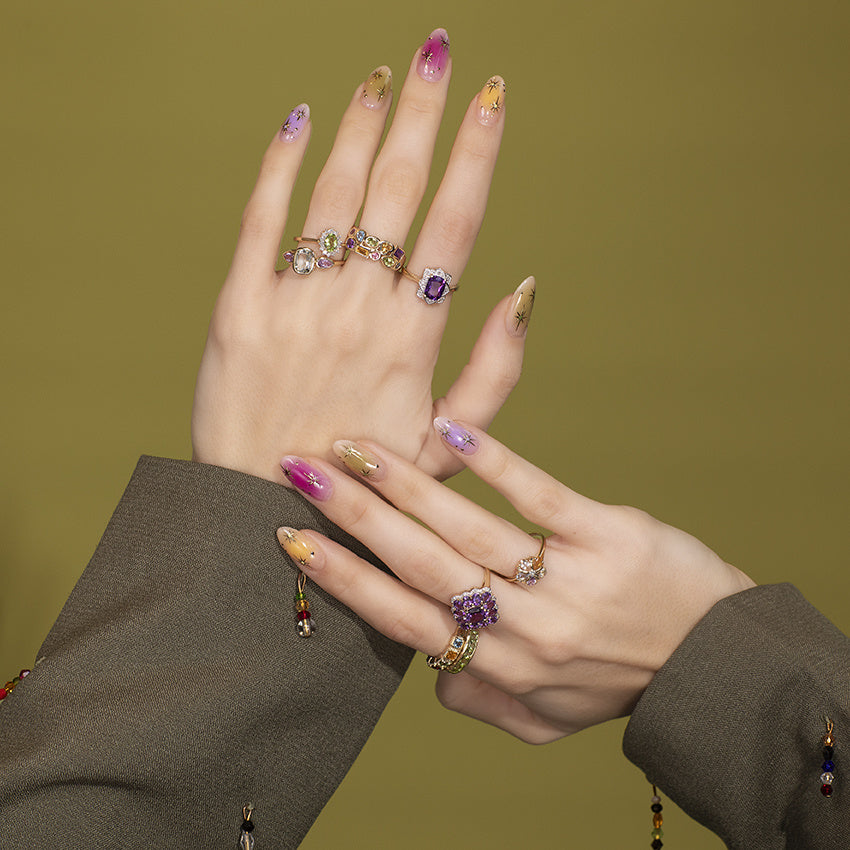
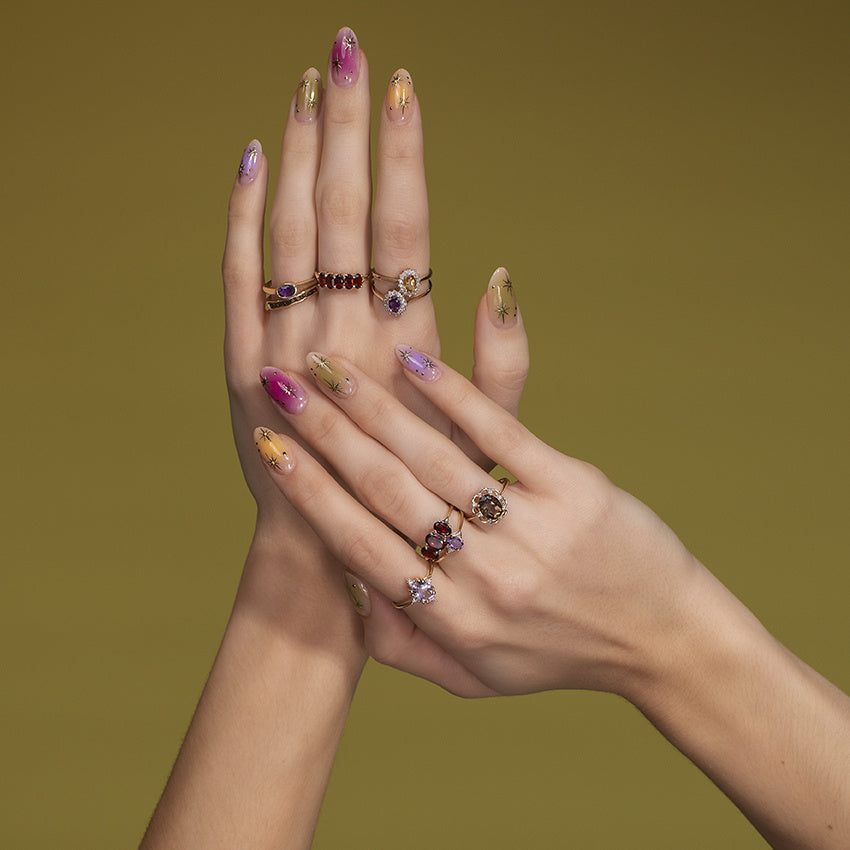
Today, amethyst remains a beloved gemstone, adding a beautiful touch to both silver and gold jewellery. Its unique color and beautiful luster make it a striking focal point in many pieces.
Maintenance
It's important to keep your amethyst jewellery as beautiful and clean as possible. Here's a brief explanation of how to do this. Use lukewarm water and a little mild soap to clean the stone. Soak the jewellery briefly and polish it gently with a soft brush, such as a toothbrush. Rinse well afterwards and pat dry with a soft cloth. With these simple tips, your amethyst will stay beautiful and radiant!
Discover our collection of vintage amethyst jewellery here .
Amethyst collection