
Gemstone · Birthstone for May
Emerald
Emerald is extremely rare, and people have loved this remarkable gemstone for thousands of years. An emerald is always a good choice: it gives any piece of jewellery a sense of strength. From the queen of Egypt to the woman next door, emerald has delighted people everywhere and in every age.
- Colour
- Green
- Hardness (Mohs)
- 7.5 – 8
- Birthstone
- May
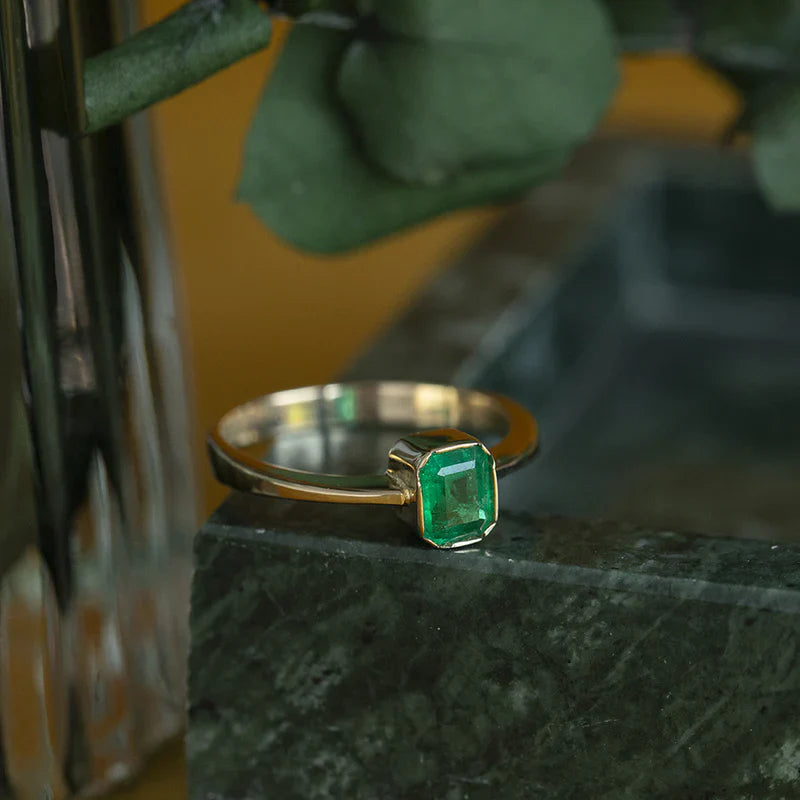
In stock: emerald jewellery
-
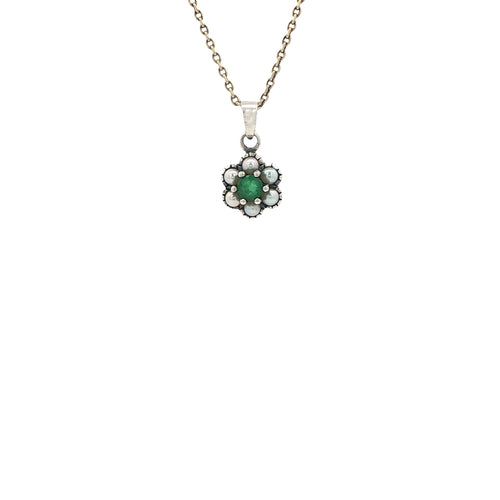 Silver pendant with emerald and pearl, 925.
€155,00
-
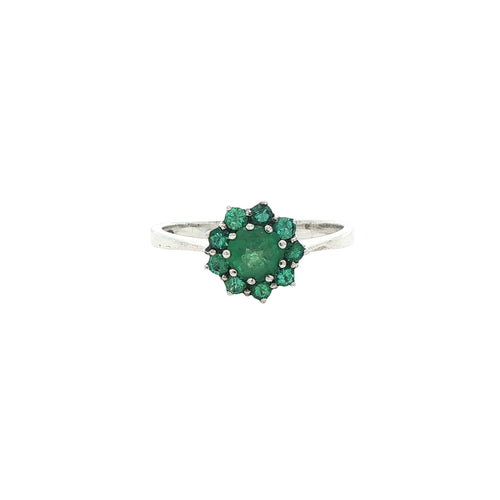 Silver ring with emerald 925
€400,00
-
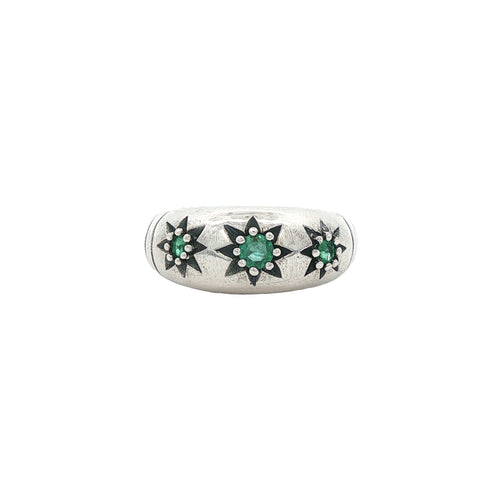 Silver ring with emerald, 925 karat
€215,00
-
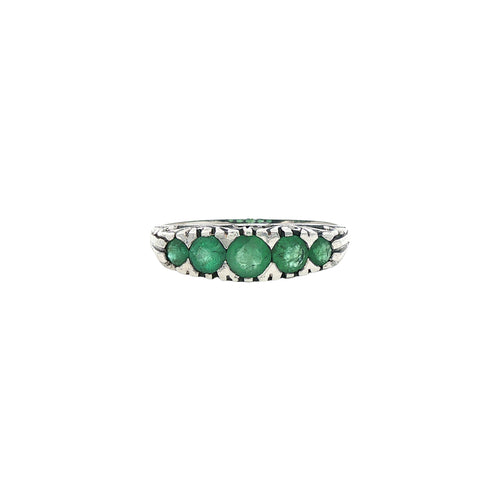 Silver ring with emerald, 925
€325,00
-
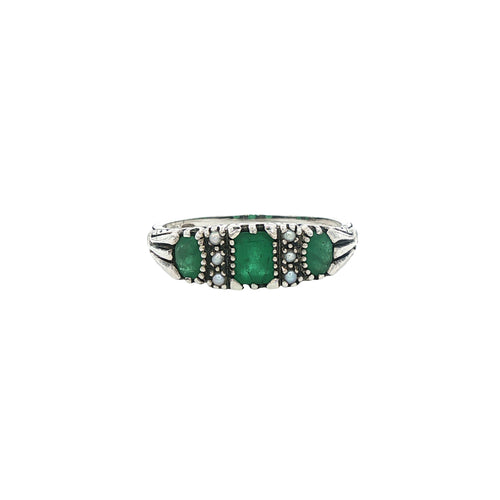 Silver ring with emerald and pearl, 925 sterling silver
€465,00
-
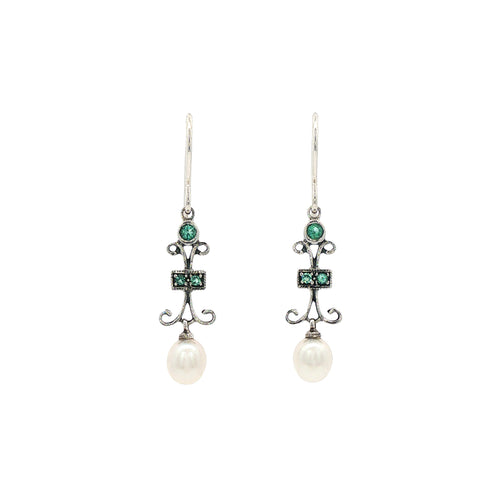 925 silver drop earrings with emerald and pearl
€190,00
-
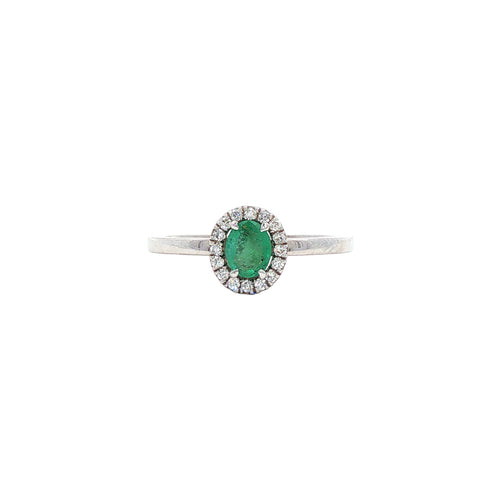 18 kt white gold ring with emerald and diamond
€995,00
-
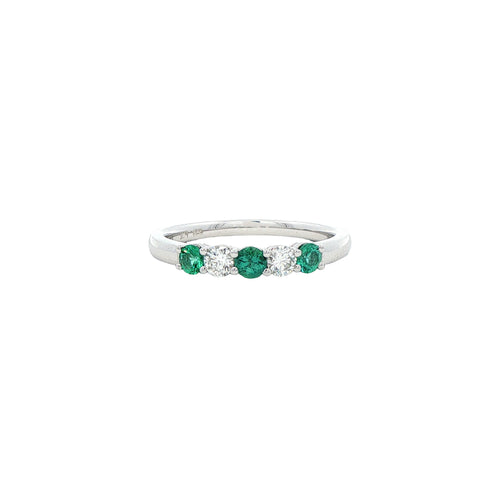 18 kt white gold ring with emerald and diamond
€1.895,00
The beryl family
Emerald is a variety of the mineral beryl, chemically known as beryllium aluminium silicate. You may also know aquamarine, the blue variety of beryl. Red bixbite, yellow heliodor and pink morganite are less familiar members of the same family. Beryl is sometimes called the mother of gemstones, because so many different stones belong to this group. Most shades of green beryl are called emerald.
Emeralds are known for their inclusions: tiny fissures and imperfections within the stone. In many other gemstones these would be seen as flaws, but in emerald it is the other way round. Inclusions make each stone unique and recognisable, rather as birthmarks make us unique. There is of course a limit: to meet the standards of a fine gemstone, the stone must still look clear and bright. The most important factors in valuing an emerald are the purity of its colour, its transparency, its clarity and its brilliance. Synthetic emeralds often lack inclusions; they are, in a sense, too perfect and are therefore valued less. The inclusions in emerald are known as the jardin, French for garden, because they recall the branches and plants of a garden.
Where does the name come from?
The name emerald derives from the Latin smaragdus, from the Greek smaragdos, meaning green gemstone. The Greek verb smaragein, to thunder, has also been linked to the name, making it a ‘thunder stone’. The Arabic achmardi, greenish, and the Hebrew bareket, gleaming stone, have also been suggested as possible origins.
Where emerald is found
Colombia is the most important source. Emeralds have been mined for centuries at the world-famous Muzo mine, north of the capital Bogotá. Most emeralds from this mine have a particular shade known as Muzo green. Other important sources were in Egypt and Russia, although most deposits there are now exhausted. Emerald is also mined in Australia, Brazil, Canada, India, Madagascar, Tanzania, Zambia and Zimbabwe.
Trapiche emerald
A very rare type of emerald is the trapiche emerald. Beryl crystallises in a hexagonal (six-sided) form, and when these six sectors are visible in the stone, divided by black or white inclusions, the result is an exceptionally rare and distinctive gemstone. Such stones are almost never seen, certainly not in set jewellery, and when they do occur they most likely come from Colombia or Brazil.
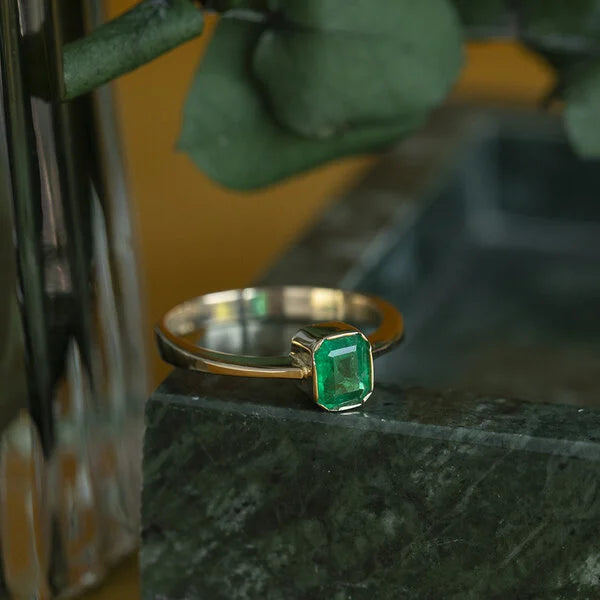
Then there is the emerald cut, a cut that shows the stone at its best. It is recognisable by its clean, straight step facets and cut corners, and is said to symbolise an open heart.

Emerald jewellery
Cleopatra, born in 69 BC, was already entirely under the spell of this magical green gemstone. She loved emerald so much that she laid claim to the emerald mines of Egypt so that she would not have to share their yield with anyone.
A few centuries later the Romans dedicated emerald to Venus, goddess of love and beauty. Influential women of our own time also appreciate emerald: Queen Elizabeth II, Diana, Princess of Wales, and our own Queen Máxima have all owned emerald jewels. In 1845 Queen Victoria received an emerald tiara from Prince Albert, with matching earrings, a brooch and a bracelet. She was painted several times wearing these jewels, and today the set can be seen at Kensington Palace. Diana made a fashion statement with an emerald necklace originally belonging to Queen Mary, which she wore not around her neck but as a headband. Queen Elizabeth II had given it to her as a wedding present.
Queen Máxima owns an emerald parure consisting of a tiara, a necklace, earrings and a brooch. The emeralds once belonged to Wilhelmina of Prussia; Queen Emma later gave the set to her daughter Wilhelmina. Today it is proudly worn by the Dutch queen, often combined with other emerald jewels.
Emerald in belief and symbolism
For more than four thousand years emerald has been revered for its beauty and for the healing powers attributed to it. The stone symbolises power and immortality, as well as rejuvenation and eternal youth. Because of this symbolism, emerald was not only used in jewellery: in the past people also kept emeralds in their homes as decoration and as a sign of status. The May birthstone is associated with the star signs Taurus, Cancer, Aquarius, Sagittarius and Scorpio. Emerald was traditionally believed to ease eye complaints, epileptic fits and sleeplessness, probably because the green stone was linked with clear sight.
Emerald owes this special place to its remarkable green colour. The colour of a ruby is described by comparison with something else, as in pigeon’s blood red, but the green of emerald is so distinctive that the colour itself is called emerald green.
Care
Emeralds are more delicate than many other gemstones. Do not use steam or ultrasonic cleaning. Clean them instead with lukewarm water, a drop of mild soap and a soft cloth or brush, without soaking. Rinse carefully and pat dry with a soft cloth, and take extra care to avoid knocks and changes in temperature.
Discover our collection of vintage emerald jewellery.
Frequently asked questions
How hard is emerald?
Emerald has a hardness of 7.5 to 8 on the Mohs scale. Because of its inclusions it is more fragile than those figures suggest, so take an emerald ring off for heavy work, sport or cleaning.
Which month is emerald the birthstone for?
Emerald is the birthstone for May. Read more about the May birthstone.
Do I get a certificate with emerald jewellery?
Yes. Our gemmologist examines the stones before a piece goes online, and the description states which stone it is. Every piece comes with a certificate.
More gemstones