
Gemstone · Birthstone for September
Sapphire
It is not only magically beautiful but also the second hardest gemstone in the world: sapphire. With its glorious deep blue colour, sapphire is one of the most popular stones for engagement rings, and it has been held in exceptionally high regard since the Middle Ages, partly because of the healing powers once attributed to it. The birthstone for September is associated with the star signs Taurus, Virgo, Libra and Sagittarius.
- Colour
- Blue, also pink, yellow and white
- Hardness (Mohs)
- 9
- Birthstone
- September
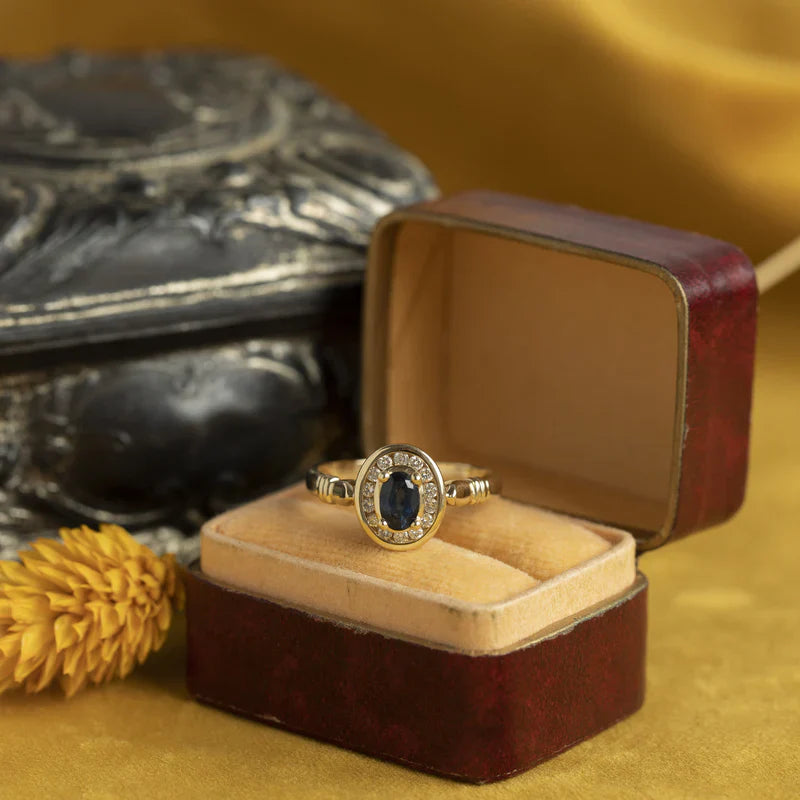
In stock: sapphire jewellery
-
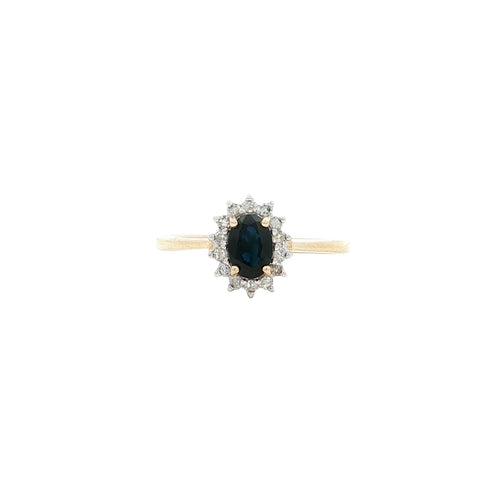 9 kt ring with sapphire and diamond
€895,00
-
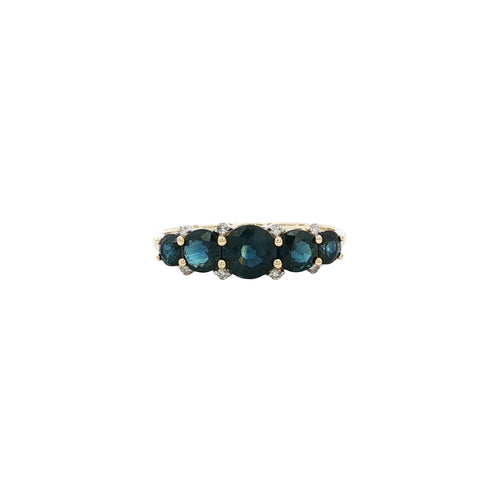 Ring with sapphire and diamond, 9 kt
€950,00
-
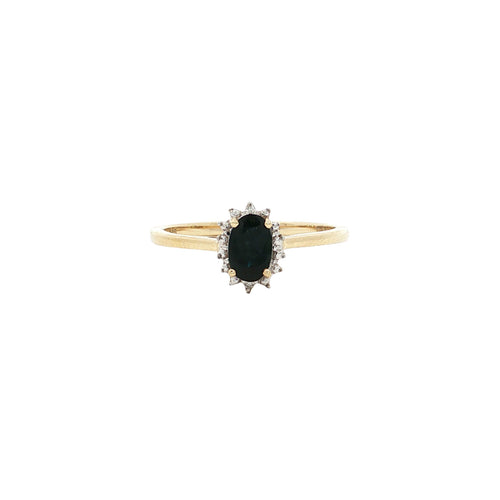 9 kt sapphire and diamond ring
€550,00
-
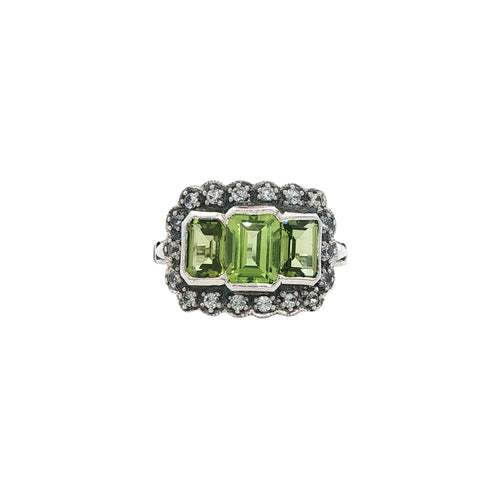 Silver ring with peridot and white sapphire, 925 sterling silver
€275,00
-
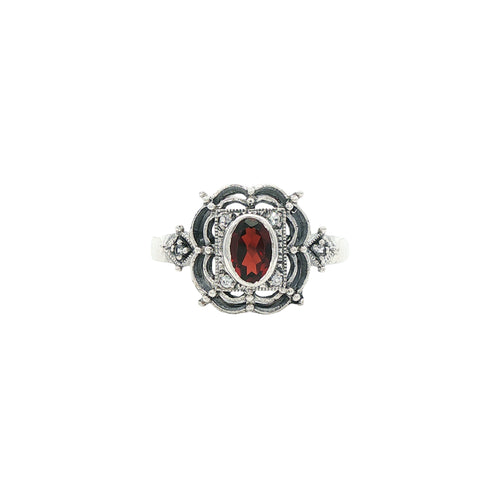 Silver ring with garnet and white sapphire, 925 sterling silver
€130,00
-
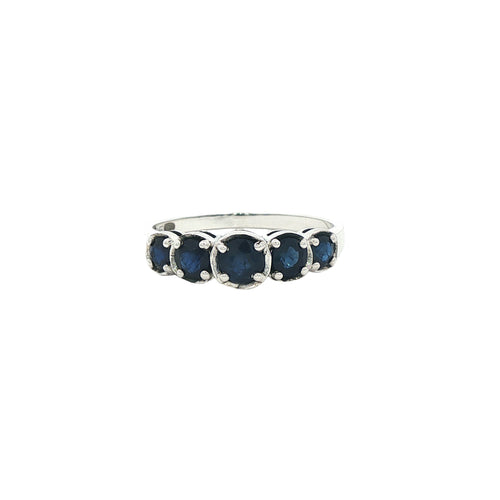 Silver ring with sapphire 925
€410,00
-
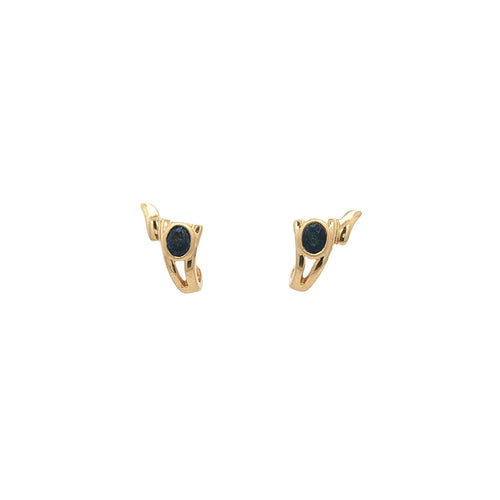 Vintage 18 kt gold stud earrings with sapphire
€1.195,00
-
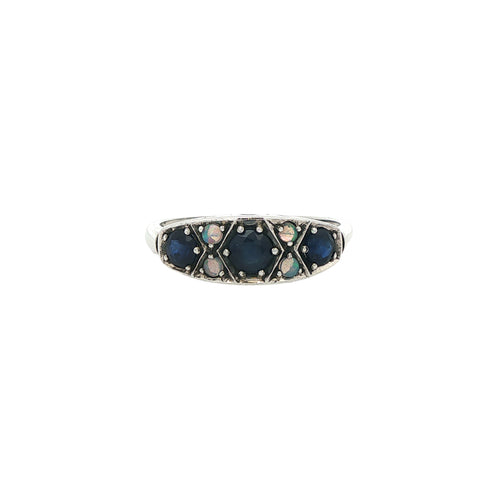 Silver ring with sapphire and opal, 925 sterling silver
€365,00
The origin of the name
The name sapphire comes from the Latin ‘sapphirus’ and the Greek ‘sappheiros’, both meaning blue or blue gem. The most common and best-known colour is indeed blue. Today, however, every colour of corundum except red is called sapphire, so the original meaning no longer quite applies.
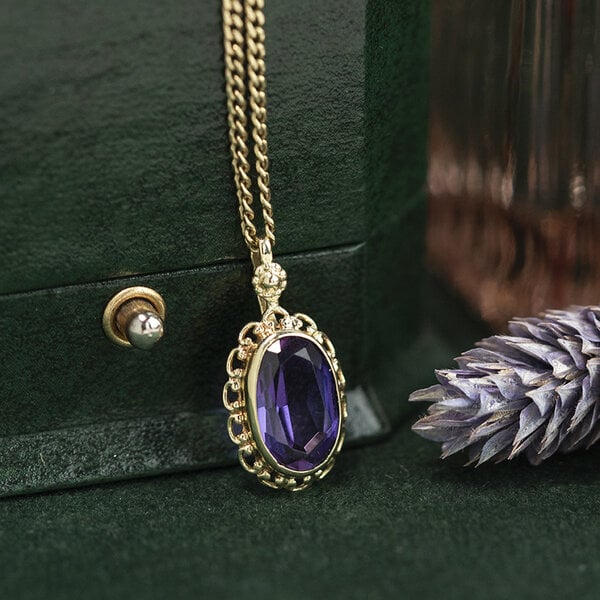
The corundum family
Sapphire is a variety of the mineral corundum, the crystalline form of aluminium oxide, which includes both ruby and sapphire. Red corundum is ruby; all other colours are called sapphire. Ruby and sapphire are therefore closely related, but differences in their chemical composition give each stone its own colour, caused by traces of elements such as chromium, iron and titanium. Corundum usually forms hexagonal crystals. Some sapphires are cut en cabochon, a domed cut, and these stones occasionally show a star: they are known as star sapphires.
Sapphires from near and far
Sapphire was originally mined in Ceylon, now Sri Lanka, the oldest known source of this remarkable gemstone, including around the city of Ratnapura, whose name means ‘city of gems’ in Sinhalese. Many more sources have since been discovered, among them China, Laos, Kenya, Cambodia, Tanzania, Nigeria, the United States (Montana), Australia and Madagascar.
For a time, particularly in the 1980s, Australia was a very important source of sapphire, until its sapphires fell out of favour because of their colour. Sapphire was only discovered in Madagascar in the early 1990s, but the island has since become a major source. Until about 1930 the finest sapphires came from Kashmir in India, which is why they are known as Kashmir sapphires.
Every colour has its own character
Blue sapphire is by far the best known and most popular, but sapphires in other colours are also very special, and rarer. Each colour has its own associations. Some of the other colours are:
- Padparadscha sapphire. After blue, this is the most sought-after sapphire. It is pinkish orange, and its colour is always much debated: what one person considers pinkish orange, another finds too dark to be a true padparadscha. The guidelines are fairly broad, but the stone must not show any brown.
- Black sapphire. Black sapphire is traditionally said to ward off suspicion and false friendships. The black star sapphire is especially popular.
- Green sapphire. This stone owes its colour to a high iron content during its formation. Iron also plays a part in blue sapphire, but in green sapphire the balance is different. Green sapphires come from Australia, Thailand, Madagascar and Sri Lanka. A perfectly clear green sapphire is very hard to find, as many stones have too much yellow or blue, which makes the green slightly dull. Green sapphire is associated with peace of mind.
- White sapphire. The ancient Greeks associated white sapphire with Apollo, god of light. Today the value of white sapphire is sometimes underestimated, as the stone is occasionally used as an alternative to diamond. White sapphire is associated with insight.
- Yellow sapphire. Yellow sapphire also owes its colour to iron. The shades range from very pale yellow to a deep orange-yellow, with many pastel tones in between, but bright yellows are the most popular. Yellow sapphire is associated with purpose, success and cheerfulness.
Besides these five there are other colours, most of them shades of those mentioned above.
An engagement ring like Catherine’s
Sapphire is a popular choice for jewellery, especially engagement rings, largely because of its blue colour. The well-known wedding rhyme ‘something old, something new, something borrowed, something blue’ shows how closely blue is linked with marriage. Sapphire has been popular with royalty for centuries, and in the past it was often sewn onto royal garments. Today’s royals happily continue the tradition, now more often in the form of jewellery. In 2010 Prince William proposed to Catherine Middleton with his mother Diana’s engagement ring: a sapphire surrounded by fourteen diamonds, set in 18ct white gold. The ring is said to have been inspired by the sapphire brooch Queen Victoria received in 1840, which looked much the same, only larger.
The engagement ring that once belonged to Diana and is now worn by Catherine is the most famous engagement ring in the world, and many people still dream of a ring like hers.

Sapphire in belief and legend
People have attributed special powers to sapphire throughout history, although the powers have changed over time and differ from one country to another. In the past people were convinced that sapphire protected against magic and witchcraft, and the blue stone was believed to have healing powers, from lowering fever to protecting against afflictions of the mind. Some even believed sapphire promoted immortality. And while people wore sapphire to protect themselves from witches, witches in turn are said to have used the same stone to see into the future. Sapphire also symbolised wisdom, strength and wealth, and its blue colour, the colour of the heavens, was thought to give it special properties. In India it was believed that sapphire opened the third eye, giving access to ultimate wisdom and insight.
In Persia people believed the sky was blue because the sun reflected the blue of sapphire upwards. Sapphire was popular among the clergy, probably because the Bible presents it as a stone that brings peace to the soul and inspires deep devotion. Clergy wore sapphire as jewellery or on their vestments as a symbol of heaven, and in the late twelfth century Pope Innocent III is said to have decreed that bishops should wear sapphire visibly.
Today sapphire above all symbolises love, sincerity, purity and truth.
Care
Sapphires are durable, but they still deserve care. Clean your jewellery in lukewarm water with a little mild soap, using a soft brush to remove dirt gently, especially around the settings. Rinse well and dry with a soft cloth. Avoid harsh cleaning products and steam cleaning.
Discover our collection of vintage sapphire jewellery.
Frequently asked questions
How hard is sapphire?
Sapphire has a hardness of 9 on the Mohs scale. After diamond it is one of the hardest gemstones, so it is durable enough for jewellery you wear every day, such as an engagement ring.
Which month is sapphire the birthstone for?
Sapphire is the birthstone for September. Read more about the September birthstone.
Do I get a certificate with sapphire jewellery?
Yes. Our gemmologist examines the stones before a piece goes online, and the description states which stone it is. Every piece comes with a certificate.
More gemstones