
Gemstone · Birthstone for December
Tanzanite
Tanzanite is a very rare gemstone, especially in vintage jewellery. This remarkable stone can show different colours, from blue to purple and everything in between, and it is mined in only one place in the world. Its distinctive, intense colour gives the stone a mystical quality that makes any ring, necklace or pair of earrings a real eye-catcher. Tanzanite is also a birthstone for December. On this page we look at its history, origin, tanzanite jewellery and more.
- Colour
- Violet-blue
- Hardness (Mohs)
- 6.5 – 7
- Birthstone
- December
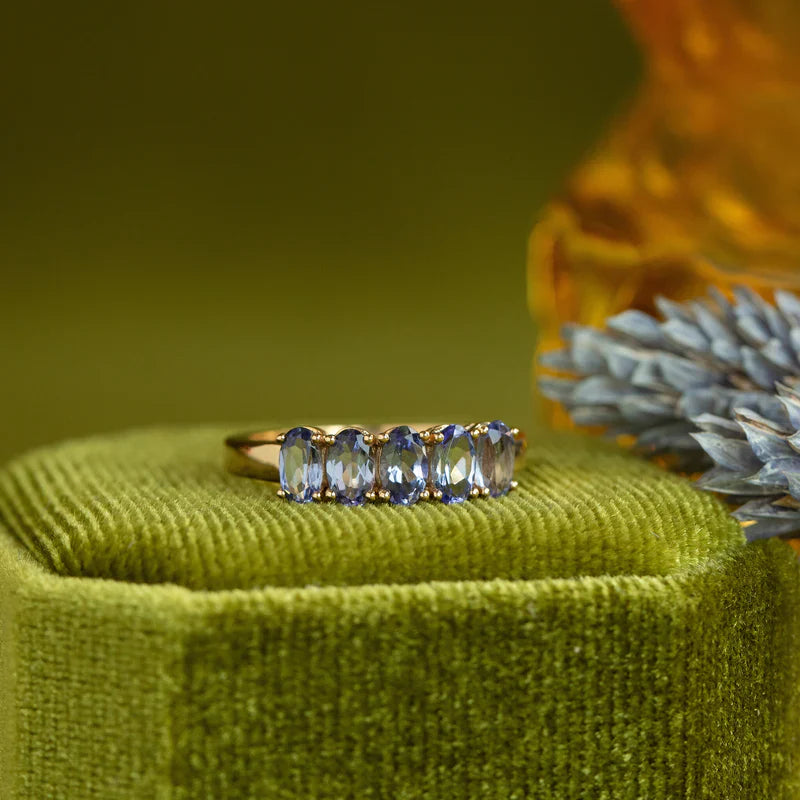
In stock: tanzanite jewellery
-
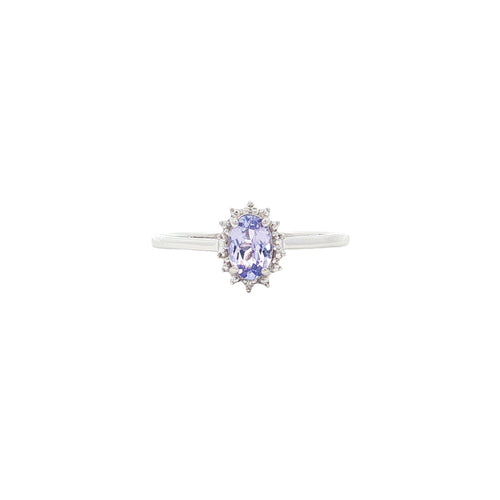 Ring with tanzanite and diamond, 9 kt
€470,00
-
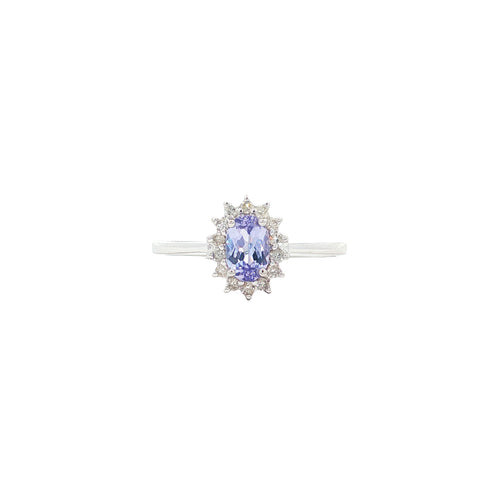 Ring with tanzanite and diamond, 9 kt
€810,00
-
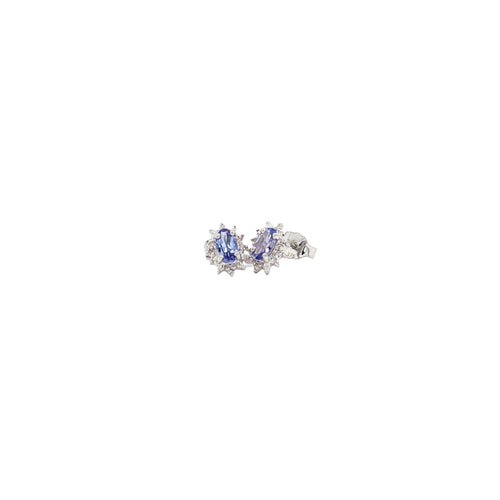 Earrings with tanzanite and diamond, 9 kt
€340,00
-
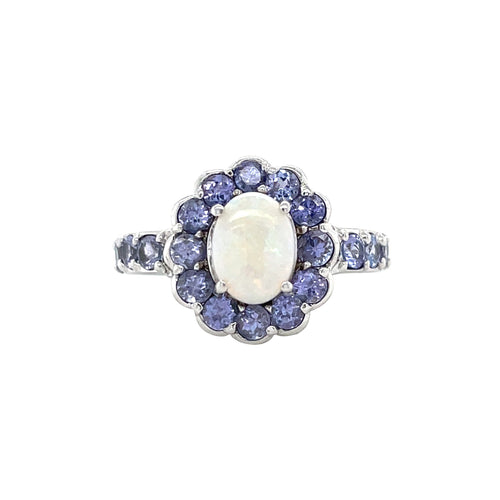 Vintage cluster ring with opal and tanzanite, 10 kt
€850,00
-
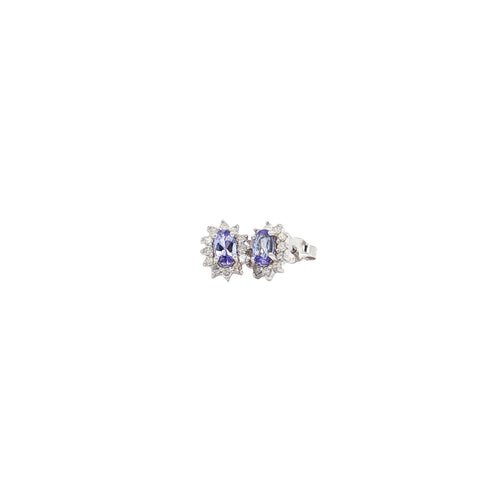 9 kt earrings with tanzanite and diamond
€885,00
The origin of tanzanite
Tanzanite owes its name to the place where it was first found: the Merelani Hills in northern Tanzania, in the shadow of Kilimanjaro, which is also the only place where natural tanzanite is found. Around 1967 a herdsman came across some shining blue stones in the dry landscape. Further investigation showed that they were not sapphires but a new variety of the mineral zoisite. Its unique qualities made the gemstone highly exclusive, and famous jewellers such as Tiffany & Co. were quick to use it, presenting tanzanite as a symbol of luxury and refinement.
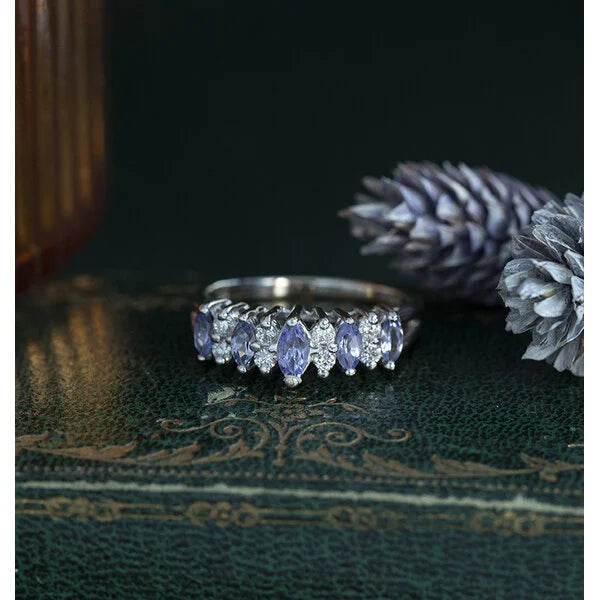
The history of tanzanite
After its discovery around 1967, the stone’s popularity grew very quickly, helped by the promotion of the renowned jewellery house Tiffany & Co. in the late 1960s, which introduced it as the most beautiful blue gemstone discovered in 2,000 years. In the 1970s and 1980s tanzanite found its way into high-end jewellery, often combined with diamonds in distinctive designs. Because the deposits in Tanzania are gradually being depleted, a tanzanite ring is seen as a luxury piece: a beautiful eye-catcher and, above all, a valuable heirloom that can last for generations.
The meaning and symbolism of tanzanite
Besides its rarity and beautiful colour, tanzanite also carries a deeper spiritual and emotional symbolism. Because of its violet-blue colour, it is associated with the throat and crown chakras, and it is seen as a powerful stone for self-expression, intuition and spiritual growth. It is said to act as a guide that helps you find inner calm and bring clarity to complicated problems or situations, and to have a calming energy that helps you let go of anxiety and stress. For many people it is therefore an ideal choice of jewellery for finding balance and harmony.
People also feel a deep emotional connection with the stone. Tanzanite is often given to mark milestones, such as an anniversary, or as a sign of mutual support and closeness between two people. It is a December birthstone and a popular anniversary gift, as it represents new beginnings and growth.
Tanzanite jewellery
A great deal of stylish tanzanite jewellery was made in the 1970s and 1980s, when the stone’s popularity was rising. In rings tanzanite was often combined with diamonds, usually as the centre stone surrounded by diamonds, a design also found in classic pendants and earrings. Refinement was important in this period, so the designs are distinctive and show a great deal of handwork. Tanzanite is also used in modern jewellery and is a popular choice for rings because of its symbolism, in designs ranging from clean and minimal to bold statement pieces. Whether it is a ring, pendant, earrings or bracelet, tanzanite always adds a touch of luxury and refinement.
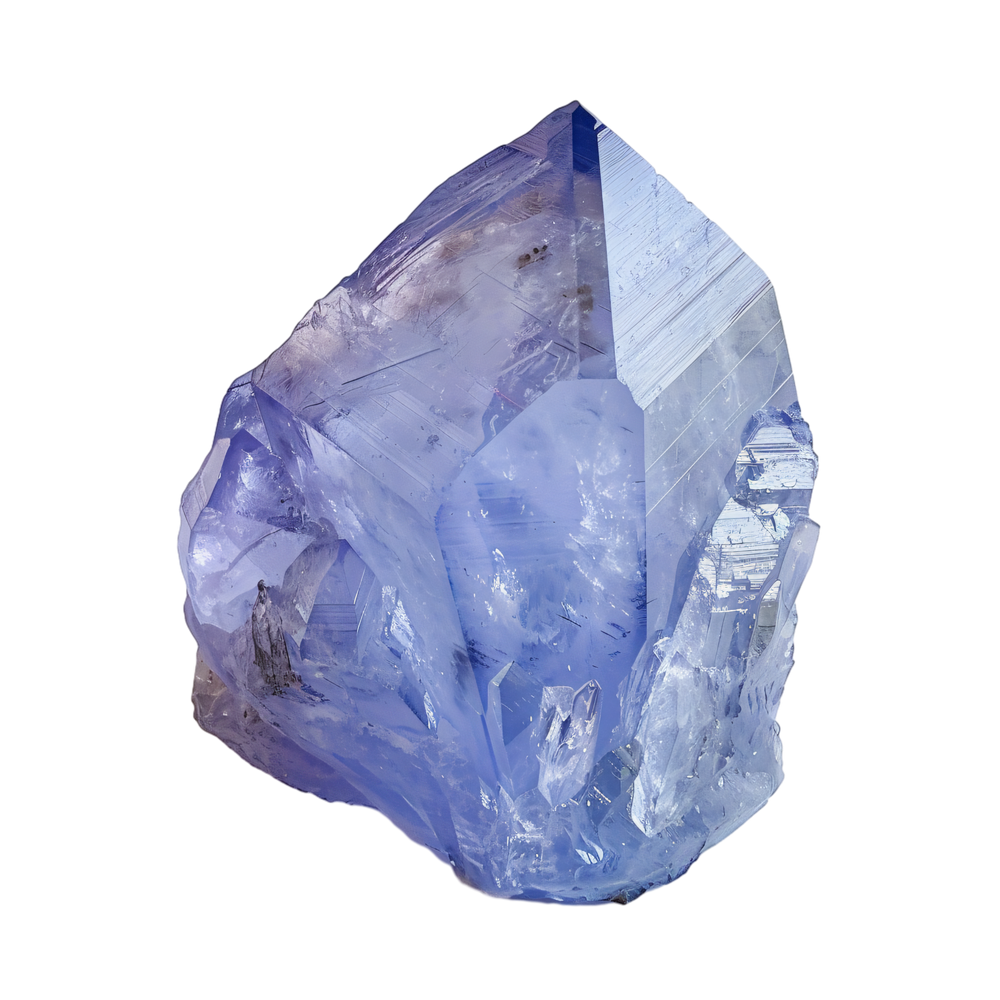
How can you recognise tanzanite?
The most striking feature of tanzanite is its colour: deep blue to purple, with a characteristic trichroism, meaning the colour changes depending on the light and the viewing angle. Tanzanite is moderately hard, with a hardness of 6.5 to 7 on the Mohs scale, which makes it reasonably durable but susceptible to scratches. Fine stones have a clear, vivid colour without visible inclusions. To be certain that a stone is tanzanite, it is best to have it tested by a professional jeweller or gemmologist with specialist equipment.
In summary
Tanzanite is a rare gemstone found only in Tanzania and known for its enchanting colours from blue to purple. Discovered in 1967, it quickly became popular thanks to jewellers such as Tiffany & Co. It is associated with intuition and self-expression and is often given to mark important milestones. In jewellery, tanzanite is a much-loved choice, especially in vintage designs from the 1970s and 1980s, often combined with diamonds. Recognise tanzanite by its colour change and have its authenticity confirmed by a professional to be sure.
Care
Tanzanite is susceptible to scratches and breakage. Use lukewarm water, mild soap and a soft cloth: no steam, no ultrasonic cleaning, and wear it with care.
Discover our collection of vintage tanzanite jewellery.
Frequently asked questions
How hard is tanzanite?
Tanzanite has a hardness of 6.5 to 7 on the Mohs scale, which is softer than sapphire or diamond, for example. It is best to take off a tanzanite ring for heavy work, sport or cleaning.
Which month is tanzanite the birthstone for?
Tanzanite is a birthstone for December, together with turquoise. Read more about the December birthstone.
Do I get a certificate with tanzanite jewellery?
Yes. Our gemmologist examines the stones before a piece goes online, and the description states which stone it is. Every piece comes with a certificate.
More gemstones