
Pearl
''A pearl is always appropriate''
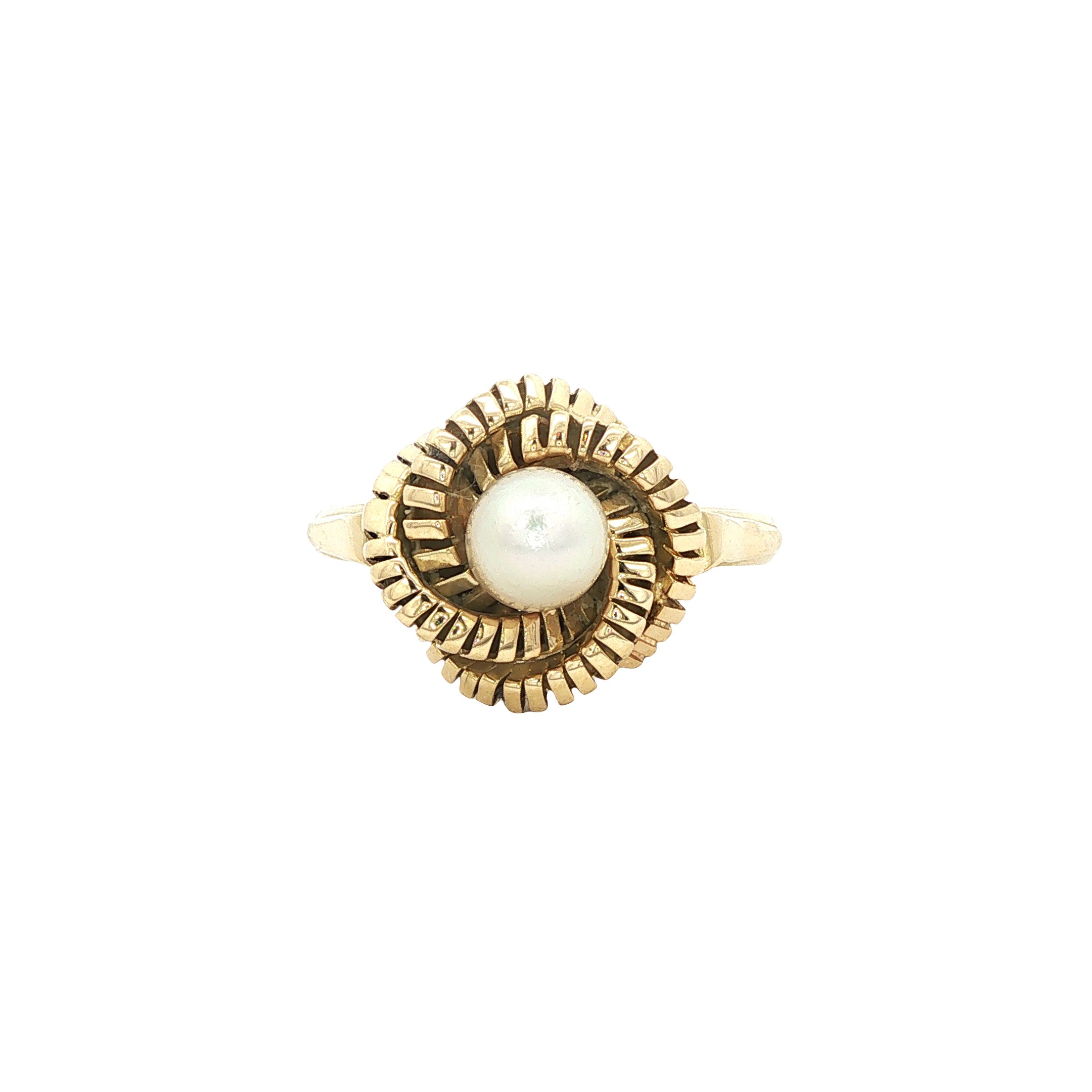
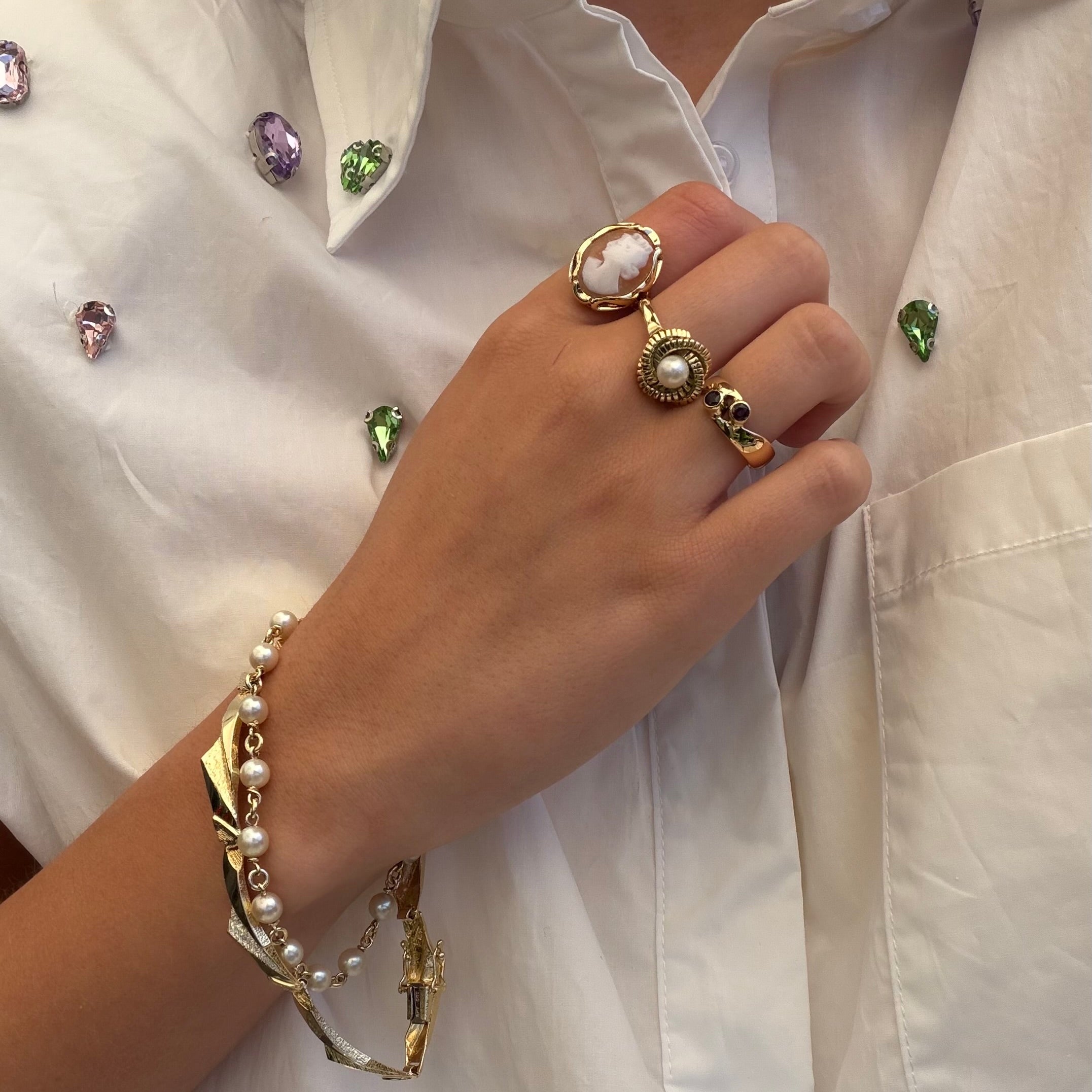
The pearl is a beautiful, classic gemstone with a unique effect on both mind and body. It provides emotional balance, brings peace and tranquility, and reduces stress. It's also the birthstone for June and a true addition to any outfit. "Pearls are always appropriate." – Jackie Kennedy. The only thing more appropriate than regular pearls? Exactly: vintage pearls.

Pearl in general
Pearls are organic products and are therefore called organic gemstones. They are organic because they are formed by mollusks such as mussels (freshwater) and oysters (saltwater). This can occur naturally or through cultivation. Therefore, pearls can be divided into natural and cultivated pearls. Natural pearls are very rare, and their extraction is not very environmentally friendly. Furthermore, the quality of pearls harvested in the wild can vary considerably. With cultivated pearls, humans influence the environment in which the shells live and the quality of the pearls that are formed. Pearl cultivation began in the early 1900s in Japan. There are four different types of pearls: freshwater pearls, akoya pearls, Tahitian pearls, and South Sea pearls. The most common of these is the freshwater pearl, which is also the most commonly used in Jewellery. Originally, pearls were harvested naturally in various European countries. Nowadays, this is limited to Latvia and Scotland. Besides European countries, natural pearls also come from North America. Japan and, in particular, China are now the largest producers of cultured pearls. The value of pearls is assessed based on four different factors: luster, color, surface area, and shape. The presence of any imperfections and the thickness of the nacre layer are also considered. Imperfections, on the other hand, can actually give vintage pearls added character.
The four different types of pearls
AKOYA : white pearls, small in size
The Akoya is the most famous saltwater pearl. Translated from Japanese, "akoya" means "my child," which in this case means "children of the sea." A distinctive feature of the Akoya is its relatively small size, never larger than 10 mm. This is because the shell in which these pearls grow never exceeds 9 cm in diameter. It takes an average of two to five years to cultivate an Akoya pearl, depending on the desired size. Furthermore, it's typical for this pearl to come in various shades of white: ivory, cream, or with a soft pink or soft yellow sheen. There are even champagne and lilac-colored pearls. Nowadays, artificially black Akoya pearls are also cultivated using laser technology. The formation of Akoya pearls involves the infusion of calcium carbonate, which creates numerous layers of nacre on top of each other. These layers ultimately give the pearl its extreme sheen, which determines its quality. The akoya pearl is always quite small and perfectly round, and for this reason is often incorporated into classic pearl necklaces. Tokichi Nishikawa and Tatsuhei Mise developed a technique to cultivate the perfectly round pearl using a special needle Mise developed for this purpose. Most of the rights to produce the perfectly round akoya pearl now belong to the Mikimoto Pearl Company. Akoya are beautiful, small, classic pearls.
TAHITI : gray/black pearls, with a colored sheen that can vary from pearl to pearl (similar to the color and sheen of oil)
The Tahitian pearl is the only pearl that is naturally black. The colors of these pearls can range from green or bronze to deep purple or black. The interior of the oyster determines the color of the pearl. Tahitian pearls are formed in relatively large oysters called "black-lipped oysters." These oysters can be 30 cm across and weigh up to 5 kg. This results in quite large pearls from these oysters, ranging in size from 8 mm to as much as 20 mm. Not only the pearls from these oysters, but also the mother of pearl from the shells was used (especially in the past) for Jewellery and adornment, and was even used as currency. Even today, the mother of pearl from these shells is still used in Jewellery.
As with Akoya pearls, the luster and shape determine the quality of the pearls. With Tahitian pearls, the cultivation process can be disrupted by, for example, intruding grains of sand. This can cause certain imperfections in the pearl's surface. Although this detracts from the pearl's value, these unique "baroque pearls," as they are called, are very popular and possess the same pure luster as perfectly formed Tahitian pearls. Tahitian pearls are mined near the island of Tahiti (hence the name) because the oyster species originates there. Tahitian pearls are also found in French Polynesia, but their export is quite strict; the pearls must have a minimum nacre (thickness of the nacre) of 0.8 mm. Pearls that do not meet this requirement are not allowed to be exported and are destroyed.
FRESHWATER : white pearls, various shapes
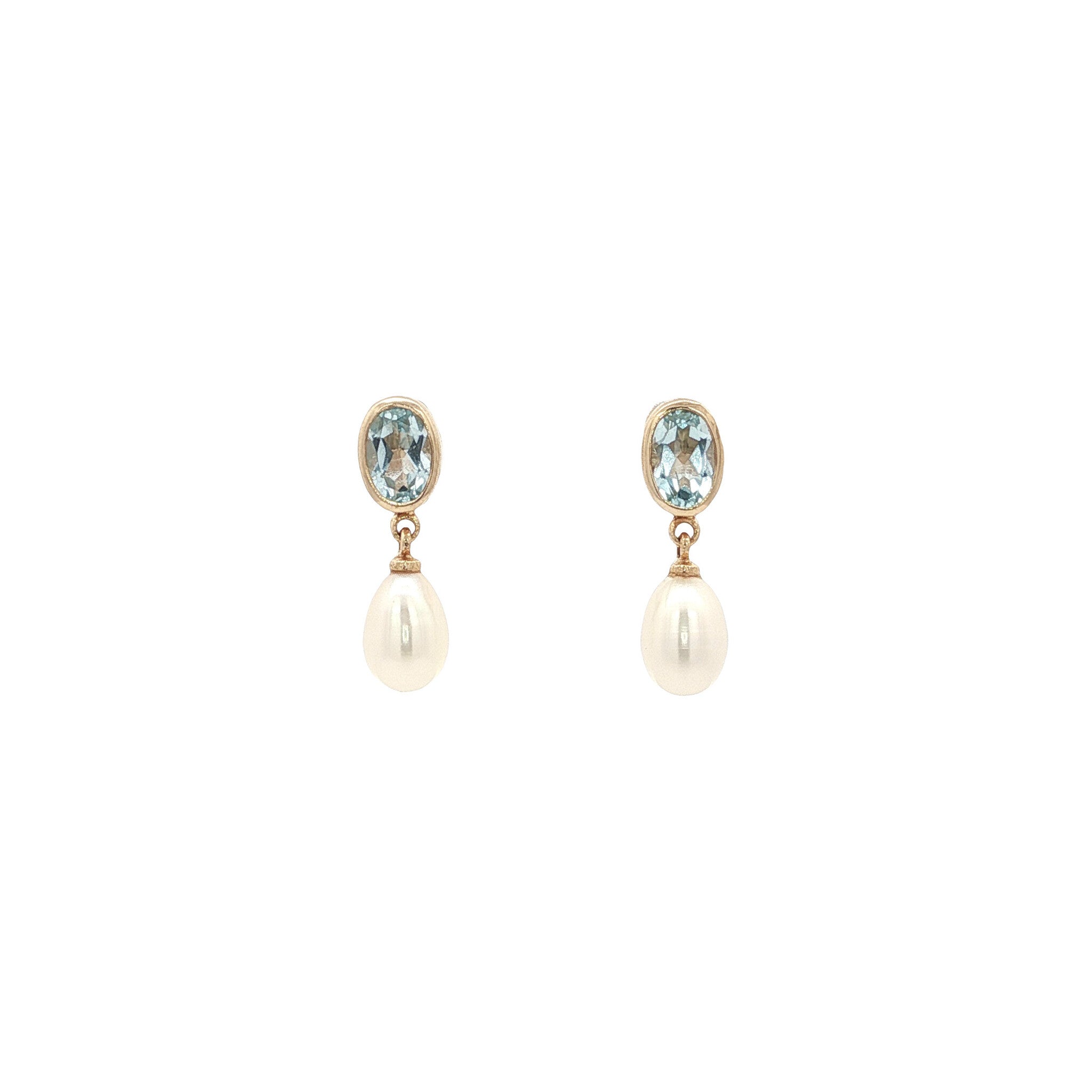
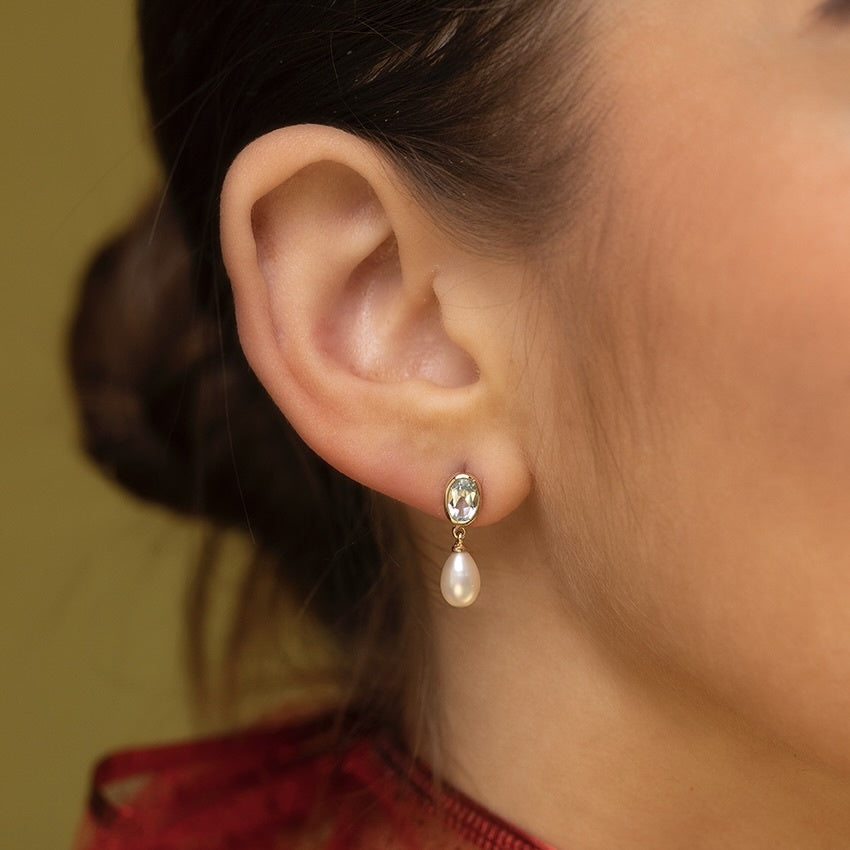
Freshwater pearls are cultivated in China and Japan, and on a smaller scale in Indonesia and the United States. Freshwater pearls are formed in mussels. Culturing these involves opening the mussel and inserting pieces of epithelial tissue into its soft tissue. A pearl then forms within the mussel in response to the inserted epithelial tissue. The formation of a freshwater pearl can take at least six months and up to ten years. Unlike saltwater pearls, freshwater pearls do not have a nucleus. This prevents the nacre from forming around a fixed point, and therefore, few freshwater pearls have a perfectly round shape. The shape of freshwater pearls is often described as potato or oval, and, for example, rice and bouton pearls. In the past, people were reluctant to create Jewellery with pearls of unusual shapes. Today, many designers see this as a challenge, and these shapes are therefore very popular. In addition to shape, freshwater pearls are selected based on color and size. The colors of freshwater pearls can vary. They naturally come in white, salmon pink, lavender pink, gray and, for example, peach orange.
The value of freshwater pearls can be lower than that of saltwater pearls because the shells in which freshwater pearls are formed are more affordable and less susceptible to disease. The formation of freshwater pearls also takes a relatively short time.
SOUTH SEA : large pearls, usually white, sometimes gold-colored
South Sea pearls are found along the coast of Australia, the Philippines, and Indonesia. White South Sea pearls primarily originate from Australia. Pearls with a more golden sheen often come from the Philippines or Indonesia. Between white and gold, pearls come in champagne shades and various gold tones. South Sea pearls are quite large; the oysters in which they form can be up to 30 cm in diameter. This means the pearl can reach a maximum size of 20 mm. This particular oyster is very sensitive and susceptible to disease. The cultivation area is also rare, making these specific pearls very valuable.

Vintage pearls: a timeless accessory
Pearls were one of the first gemstones to become known. Until the mid-nineteenth century, pearls were extremely rare and therefore very valuable. This gave this "miracle of nature" a special status, making it a symbol of wealth, power, and refinement. Pearls also play an important symbolic role in myths and legends. For example, the Bible states that the gates to Heaven are made of pearls. Furthermore, the Greeks believed that pearls were tears of joy from Aphrodite, the Greek goddess of love and fertility. According to an ancient Arab legend, pearls were formed when dewdrops fell into the sea, where they were filled with moonlight. Oysters would then swallow these dewdrops, creating pearls. Ancient Egyptians associated pearls with Isis, the goddess of healing and life. The stone quickly became very popular among royals and rulers. Julius Caesar had a special love for pearls; he once paid sixty thousand gold pieces for one. From the sixteenth century onwards, European royals also greatly appreciated pearls; Queen Elizabeth I, for example, was nicknamed the "pearl queen" and wore both new and vintage pearls from the family.
Besides the fact that important figures like these loved to wear pearls, wealthy people also enjoyed having themselves depicted in paintings with pearl necklaces and earrings. Just think of "The Girl with the Pearl Earring" (Johannes Vermeer 1665-1667). To this day, the pearl remains a popular fashion accessory among royals and celebrities; Princess Diana often wore pearls. Her pearls now often hang around the necks of Kate Middleton and Meghan Markle. Furthermore, fashion icon Coco Chanel, for example, is known for her love of pearls. It is likely thanks to figures like these that the pearl has maintained its special status for so many centuries. Today, trendsetters like Harry Styles and Rihanna ensure that the pearl remains popular. Netflix series like The Crown and Bridgerton are doing their part to help. According to ELLE Magazine, the (vintage) pearl necklace is even set to become the accessory trend of the coming summer.
Maintenance
Pearls are delicate and require careful care. Wipe them gently with a damp cloth after wearing. Do not use soap or chemicals, and store them separately from other Jewellery.
Discover our collection of vintage pearl Jewellery here .
Pearl collection