
Gemstone · Birthstone for February
Amethyst
Amethyst, the purple variety of quartz, has been one of the best-loved gemstones in jewellery for centuries. In the past this purple stone was considered as special as sapphire, emerald and ruby, which is why amethyst jewellery was often worn by kings and bishops. Amethyst is the birthstone for February.
- Colour
- Purple, from lilac to deep violet
- Hardness (Mohs)
- 7
- Birthstone
- February
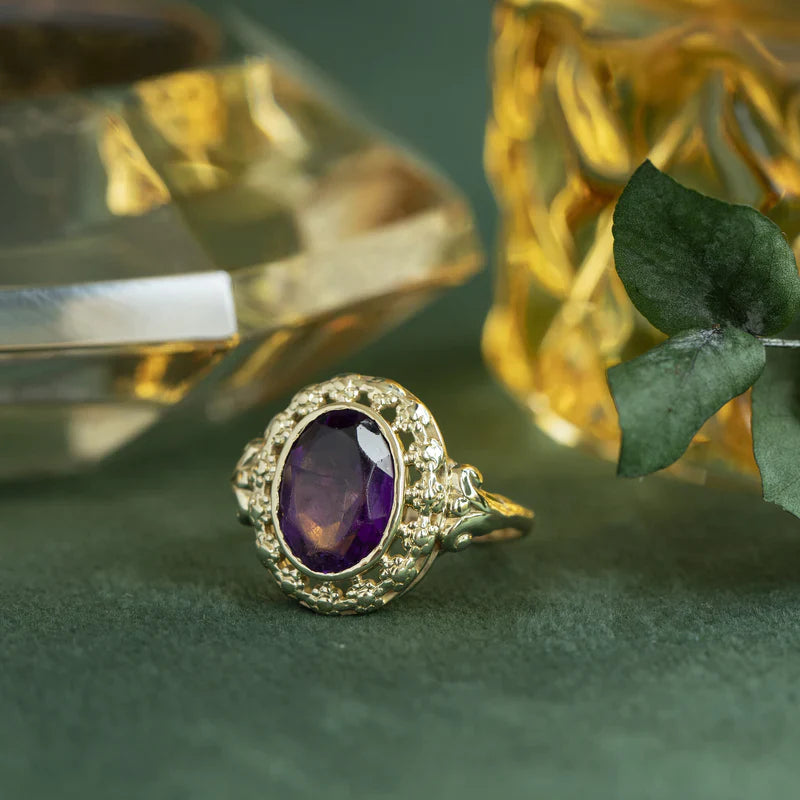
In stock: amethyst jewellery
-
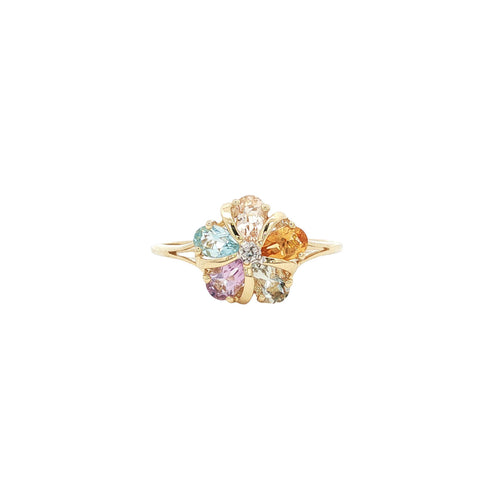 Ring with amethyst, topaz, morganite, citrine and diamond 9 kt
€460,00
-
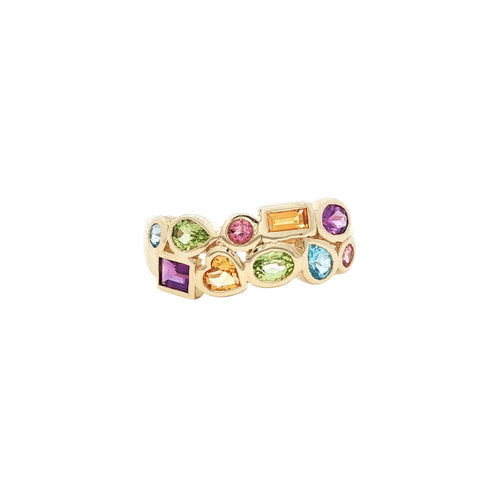 Ring with citrine, amethyst, peridot, topaz and tourmaline, 9 kt
€875,00
-
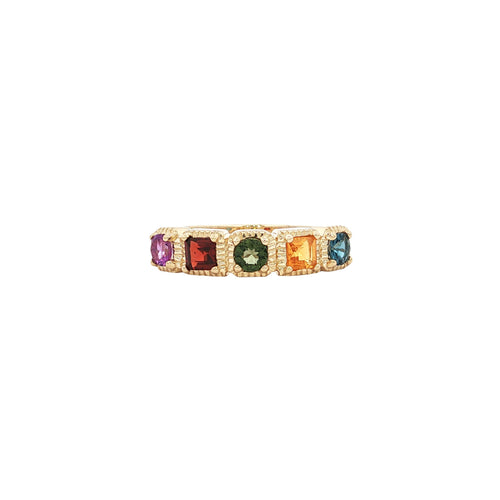 Ring with amethyst, garnet, tourmaline, citrine and topaz, 9 kt
€585,00
-
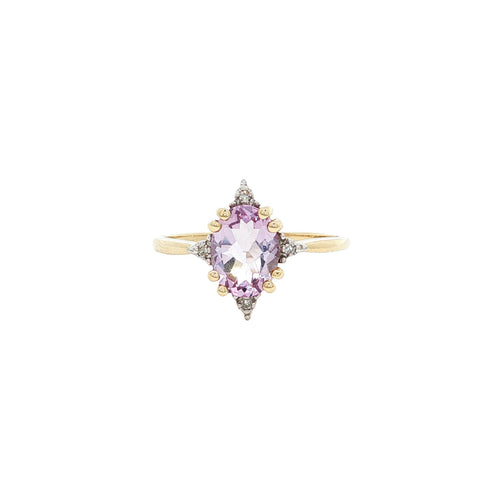 Ring with amethyst and diamond, 9 kt
€480,00
-
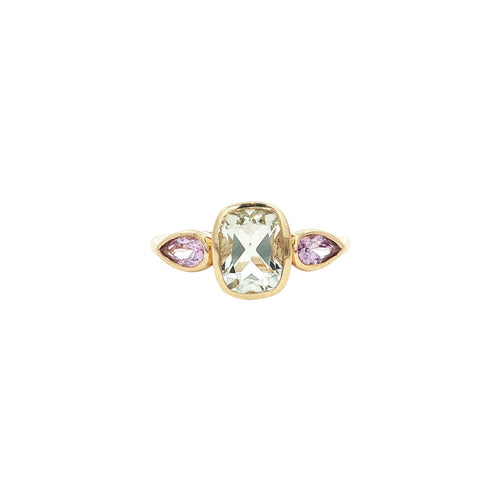 Amethyst ring 9 kt
€560,00
-
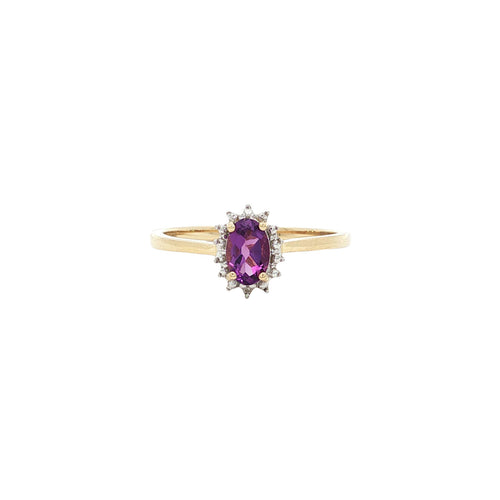 Ring with amethyst and diamond, 9 kt
€425,00
-
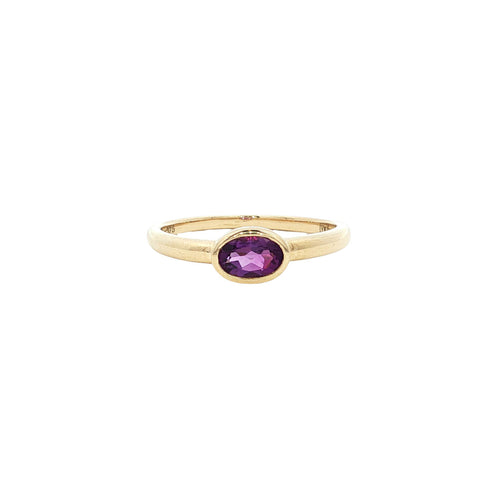 Amethyst ring, 9 kt
€415,00
-
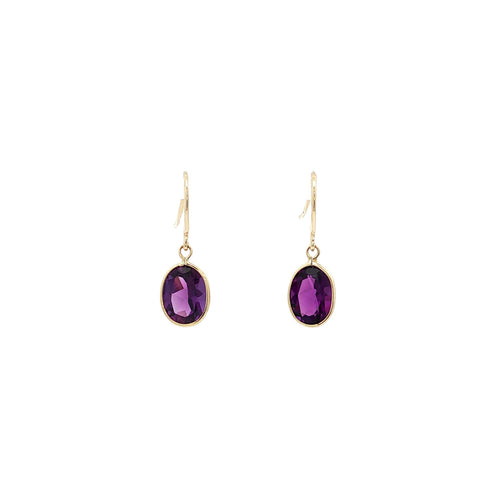 Amethyst earrings 9 kt
€280,00
A rare purple stone
Quartz is one of the largest mineral groups in the world and occurs in many different colours and forms. Although quartz is a common mineral, the purple variety is relatively rare, which makes amethyst the most valuable member of the quartz family. Amethyst occurs in both transparent and translucent forms and ranges from pale lilac to deep purple. It can in principle be found anywhere in the world; major deposits include those in Canada, the United States, France, Myanmar, Russia and Sri Lanka.
Tough, yet easy to cut
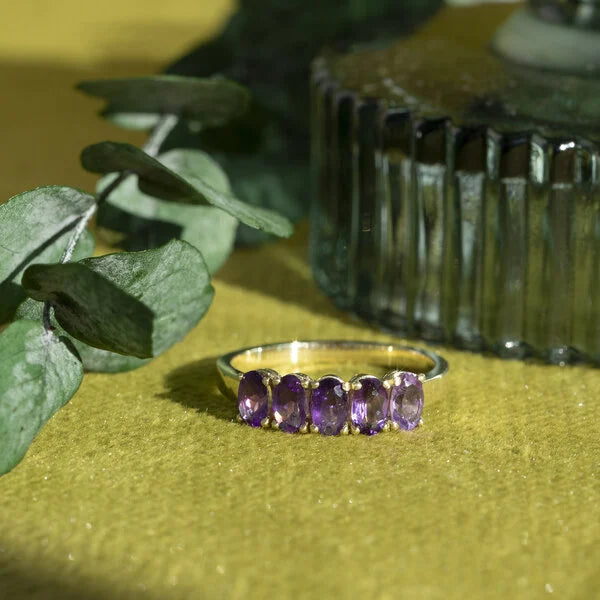
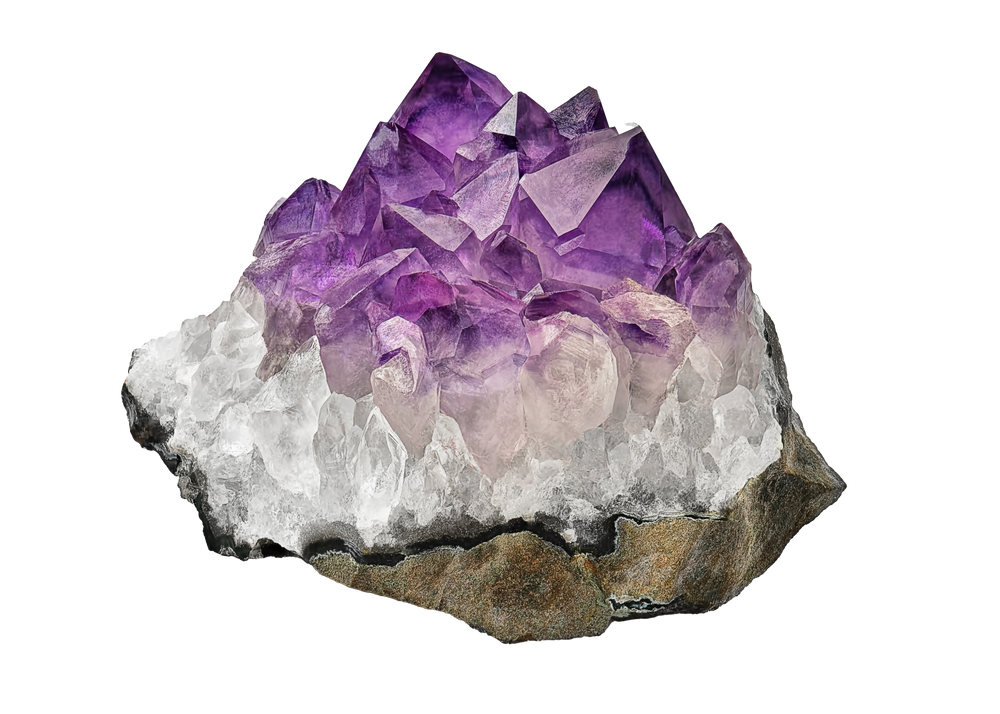
Amethyst forms deep in the earth’s crust under high pressure and temperature, and grows in characteristic hexagonal crystals. These crystals are so attractive that they are also sought after in their rough form. Amethyst is also widely cut for use in jewellery: lapidaries find it relatively easy to facet into distinctive gemstones in all kinds of cuts. Because amethyst is easy to cut yet very durable, it is also used for small carvings. Its greatest popularity, however, remains in jewellery.
The more purple, the better
The most valuable amethyst is completely transparent, free of inclusions, with a bright lustre and a deep purple colour. Lesser qualities have a paler purple colour and are partly opaque, sometimes with white bands of colourless quartz running through the purple. Because amethyst is relatively rare, much amethyst today is obtained by heating citrine, the yellow variety of quartz, which changes its colour from yellow to purple.
Popular with the ancient Greeks and Romans
Amethyst was one of the first gemstones people wore as jewellery. Amethyst jewellery has been found in ancient Egyptian tombs, and the ancient Greeks and Romans were well-known admirers of the purple mineral. Although quartz is found all over the world, amethyst was its rare sister that turned up only now and then. That changed in the nineteenth century, when large quantities of amethyst were discovered in Brazil. Until then amethyst was so rare that it was as expensive as the far rarer sapphire, ruby and emerald.
Amethyst jewellery was also popular and exclusive because the colour purple had a special meaning in antiquity: it was a colour worn only by royalty. Julius Caesar even had it laid down in law that during his reign he alone was allowed to wear purple. The first Christian rulers also regarded purple as a special colour, and it is no coincidence that popes and bishops had their signet rings made with amethyst. Saint Valentine, the patron of Valentine’s Day, is said to have worn a ring set with an amethyst carved in the shape of Cupid on the day he died.
A cure for hangovers?
In antiquity amethyst was chosen not only for its beautiful colour and lustre. People firmly believed in the stone’s mysterious healing powers. The Roman writer Pliny the Elder wrote that amethyst was known as a stone that protected against drunkenness; the Greek term ‘amethystos’, from which the mineral takes its name, means ‘not drunk’. The Romans also believed that wearing an amethyst would protect you from curses cast by your enemies.
Women’s rights
More recently the stone took on an extra meaning for a generation of women. You may have heard of the Suffragettes, a group of women who fought for women’s suffrage in the early twentieth century. The colours green, white and violet stood for the slogan ‘Give Women Votes’. In this period a great deal of jewellery was made combining peridot (green), pearls (white) and amethysts (violet) as a symbol of the struggle for equal rights for women and men.
Today amethyst is still a much-loved gemstone that suits both silver and gold jewellery beautifully. Its distinctive colour and lustre make it a striking centrepiece for many a piece.
Care
To keep your amethyst jewellery looking its best, clean the stone with lukewarm water and a little mild soap. Let the piece soak briefly and brush it gently with a soft brush, such as a toothbrush. Rinse well and pat dry with a soft cloth.
Discover our collection of vintage amethyst jewellery.
Frequently asked questions
How hard is amethyst?
Amethyst has a hardness of 7 on the Mohs scale, which makes it durable enough for jewellery you wear often, such as a ring.
Which month is amethyst the birthstone for?
Amethyst is the birthstone for February. Read more about the February birthstone.
Do I get a certificate with amethyst jewellery?
Yes. Our gemmologist examines the stones before a piece goes online, and the description states which stone it is. Every piece comes with a certificate.
More gemstones