Shop since 1973 100% recycled and restoredSame day shipping
Shop since 1973 100% recycled and restoredSame day shipping

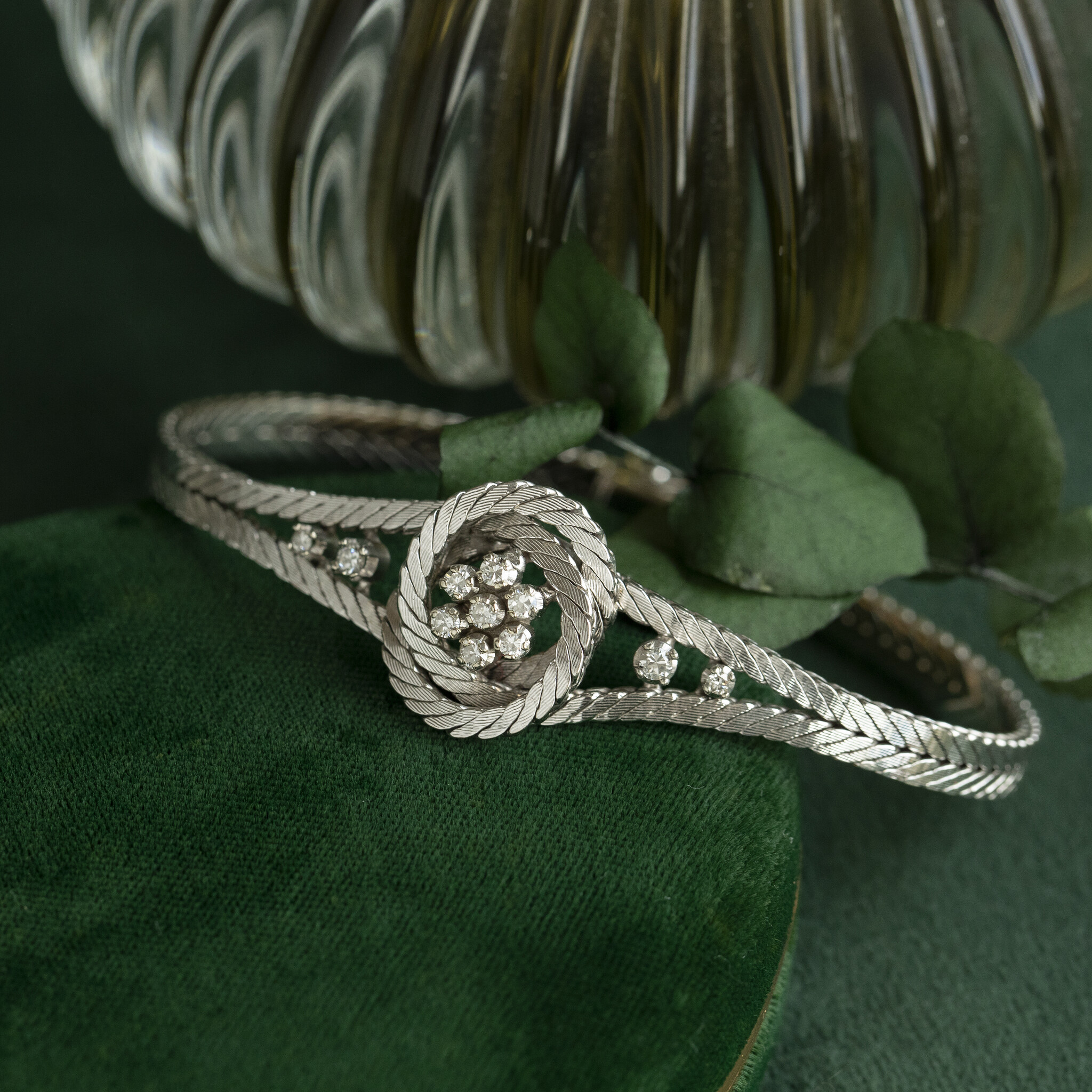
White gold is loved for its silvery-white shine, but how can you be sure that your piece is truly made of white gold? Recognising white gold requires an eye for detail. Pay attention to the hallmarks, the colour, the weight and the finish. In this blog, we’ll explain step by step how to identify white gold, so you can enjoy your precious jewellery with confidence.
The first step in recognising white gold is checking the hallmark. Every gold piece should contain an official stamp indicating its gold content. For white gold, you will often find hallmarks such as 585, 750, or 833, which correspond to 14-, 18-, and 20-karat gold respectively.
These markings are usually found on the inside of a ring, on the clasp of a necklace, or on the back of an earring. If you don’t see a hallmark, it’s wise to be cautious. The piece may not contain an official gold alloy or could be a reproduction with little to no intrinsic value.
There are several ways to test whether a piece is truly white gold:
Magnet test: Gold is not magnetic. If your jewellery is attracted to a magnet, it likely contains another metal.
Acid test: A jeweller can use a special testing kit to apply a drop of acid to the metal. The reaction reveals whether the piece is white gold, silver, or another metal.
Professional analysis: For complete certainty, a jeweller can test the piece with an advanced spectrometer. This device accurately measures which metals are present.
These tests are best performed by a specialist to avoid damaging the jewellery.
A characteristic of white gold is that it is often coated with a layer of rhodium, a precious metal that adds extra shine and protection. Over time, this layer can wear off, causing the jewellery to appear slightly yellowish or dull. This does not mean the piece is no longer white gold—only that the rhodium layer may need renewing.
So if you see slight discolouration or a warm undertone, it is likely the underlying gold becoming visible. A jeweller can easily re-rhodium plate the piece, restoring it to its original brilliance.
Besides hallmarks and colour, you can recognise white gold through several subtle characteristics:
Weight: White gold feels heavier than silver or steel.
Shine: It has a softer, warmer shine compared to the cool, mirror-like appearance of silver.
Durability: White gold is harder and less prone to scratching than pure gold or silver.
Price: Genuine white gold is more valuable. An unusually low price can be a warning sign.
When comparing several pieces side by side, white gold often stands out with its distinct, luxurious appearance.
Do you have a piece you’d like to verify as real white gold? Feel free to visit Vintage Jewellery. Our experts have years of experience identifying, evaluating and restoring gold jewellery. This ensures you know exactly what you own and can wear your piece with complete confidence.
Discover our collection of vintage jewellery.