


Turquoise
Turquoise: the stone of protection and harmony
In this blog post, we'll discuss a beautiful gemstone that reminds many of the ocean thanks to its various shades of blue and green. Turquoise is a gemstone with a rich history and a beautiful appearance. Whether it's a vintage silver ring or a detailed gold bracelet with turquoise, this gemstone exudes elegance and charm.

The history of turquoise
Turquoise is one of the oldest and most prized gemstones, with a rich history dating back thousands of years. Even in ancient Egypt, the stone was used in Jewellery and symbolic objects, such as Tutankhamun's death mask. In Persia, turquoise was seen as a symbol of power and protection, while Native Americans used it in spiritual rituals and Jewellery, considering it a connection between heaven and earth. The name "turquoise" refers to the trade via Turkey, through which the stone reached Europe, where it became popular as a talisman and ornamental stone.
Throughout history, turquoise has been mined in regions such as Iran, Egypt, China, and the United States, each with its own unique characteristics. The stone remains beloved for its vibrant blue and green-blue hues, often interspersed with natural patterns. Today, turquoise is not only a stylish element in Jewellery but also a vehicle for history, spirituality, and timeless beauty.
Origin of turquoise
Turquoise is mined in several places around the world, with the most famous sources being in countries like Iran, Egypt, the United States, and China. Turquoise has been found for thousands of years in Iran, ancient Persia, and is also prized for its deep, beautiful, solid blue color. The world's oldest turquoise mines, which were already used by the pharaohs, are located in Egypt's Sinai Desert. Today, they are also found in the United States, in Arizona, Nevada, and New Mexico. In each region, turquoise has its own unique characteristics, from color to pattern.
The meaning of turquoise
Turquoise is loved not only for its color but also for its symbolic meaning. The stone is said to symbolize protection, balance, and healing, and it was believed that turquoise could also ward off negative energy. Besides protection, the stone is also associated with wisdom, happiness, and a connection with nature. Because of all these different aspects, the stone is very popular among those who believe in this symbolism. Turquoise is the birthstone for December, making it a special gift for those born in this winter month.

Turquoise in Jewellery
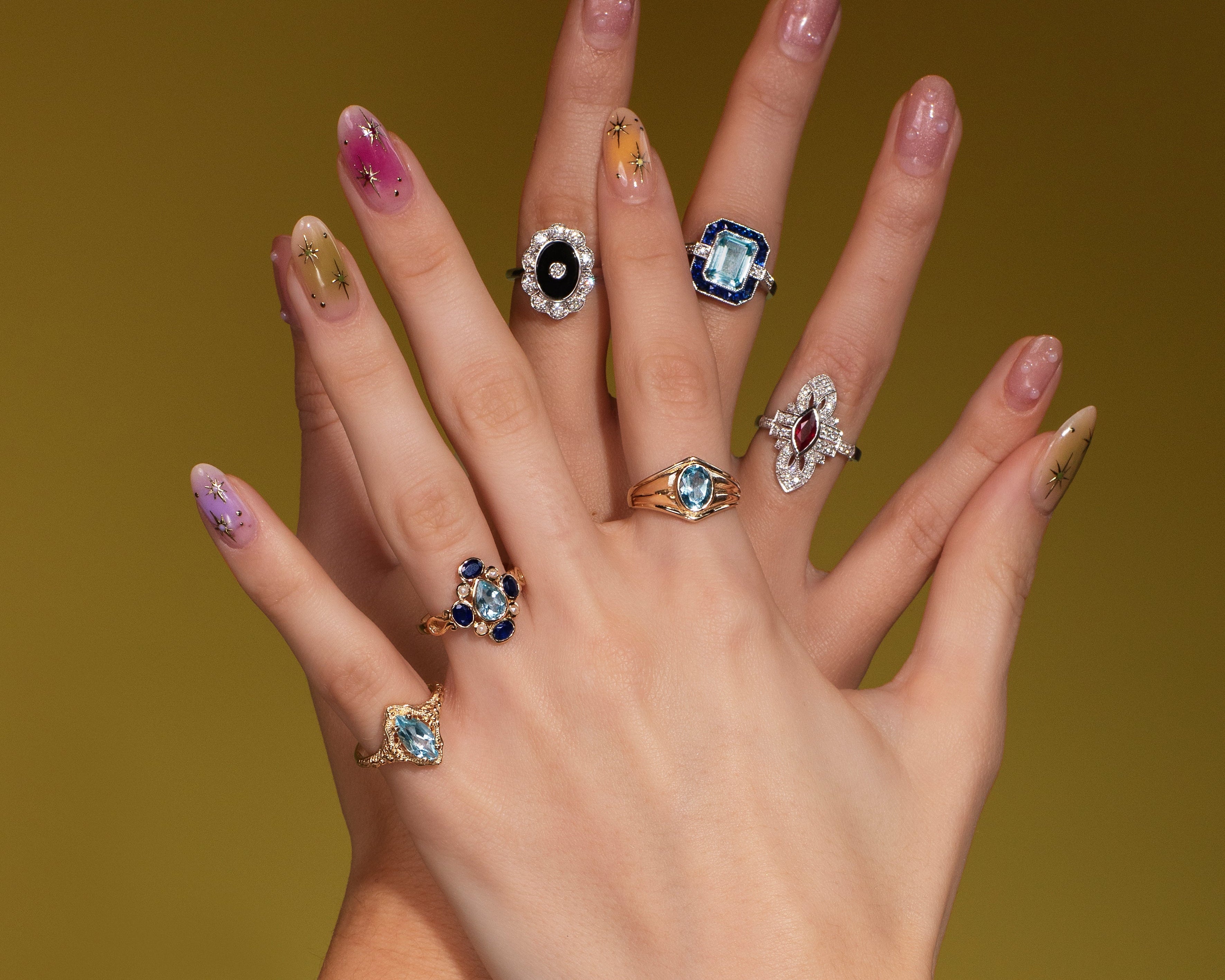
Its vibrant blue-green color makes turquoise a unique and striking gemstone for a variety of Jewellery styles, from delicate earrings to statement rings. Turquoise Jewellery can be found in a variety of styles, from bohemian to modern; it's a versatile gemstone. Its symbolism also makes it a popular stone for Jewellery, believed to offer protection and balance.
Here are some tips for wearing turquoise Jewellery:
- For an everyday look: Consider a simple turquoise ring combined with a nice bangle.
- For a striking accent: Choose a statement necklace with turquoise and a matching statement ring.
- For bohemian style: Wear turquoise Jewellery combined with natural materials such as leather or cotton.
With this timeless gemstone you not only add colour to your outfit, but also a piece of history and meaning.
In summary
Turquoise is a timeless gemstone with vibrant blue-green hues and a rich history. From Egyptian pharaohs to Native Americans, it symbolizes power, protection, and balance. As the December birthstone, turquoise is mined worldwide, with unique characteristics from Iran, Egypt, the United States, and China. Its beauty and meaning make turquoise a versatile choice for Jewellery, from bohemian to modern.
Maintenance
Turquoise is porous and can be discolored by soap or perfume. Clean only with a dry or slightly damp cloth. Do not use water or cleaning agents.